Feeds:
Posts
Comments

Archive for the ‘Uncategorized’ Category

Baking up a storm

We had kind of settled into a wave of warm (around 70) weather here and I was quickly leaving winter behind when she reared her kind of ugly head last week.  We had a full day of rain-a rarity around these parts, which also meant lots of snow in the mountains! I have been craving something delicious and whole grain for breakfast and while standing again in a bakery searching for such a fantasy, a thought occurred to me “oh yeah, I’m a professional baker” I have everything I need to make my own. It became a day to fill the kitchen with warmth by baking up a storm of my own!
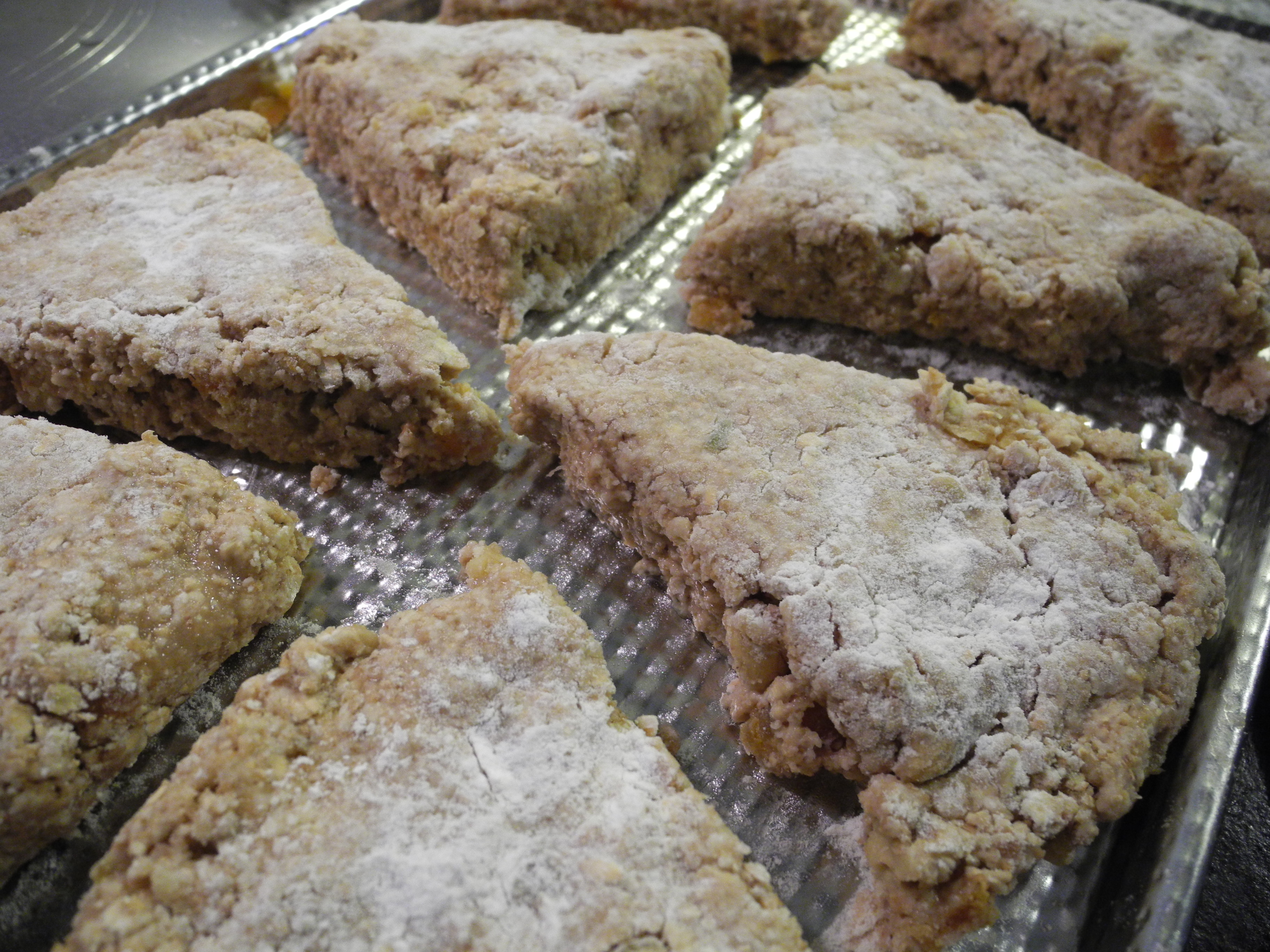
Scone triangles ready for the oven

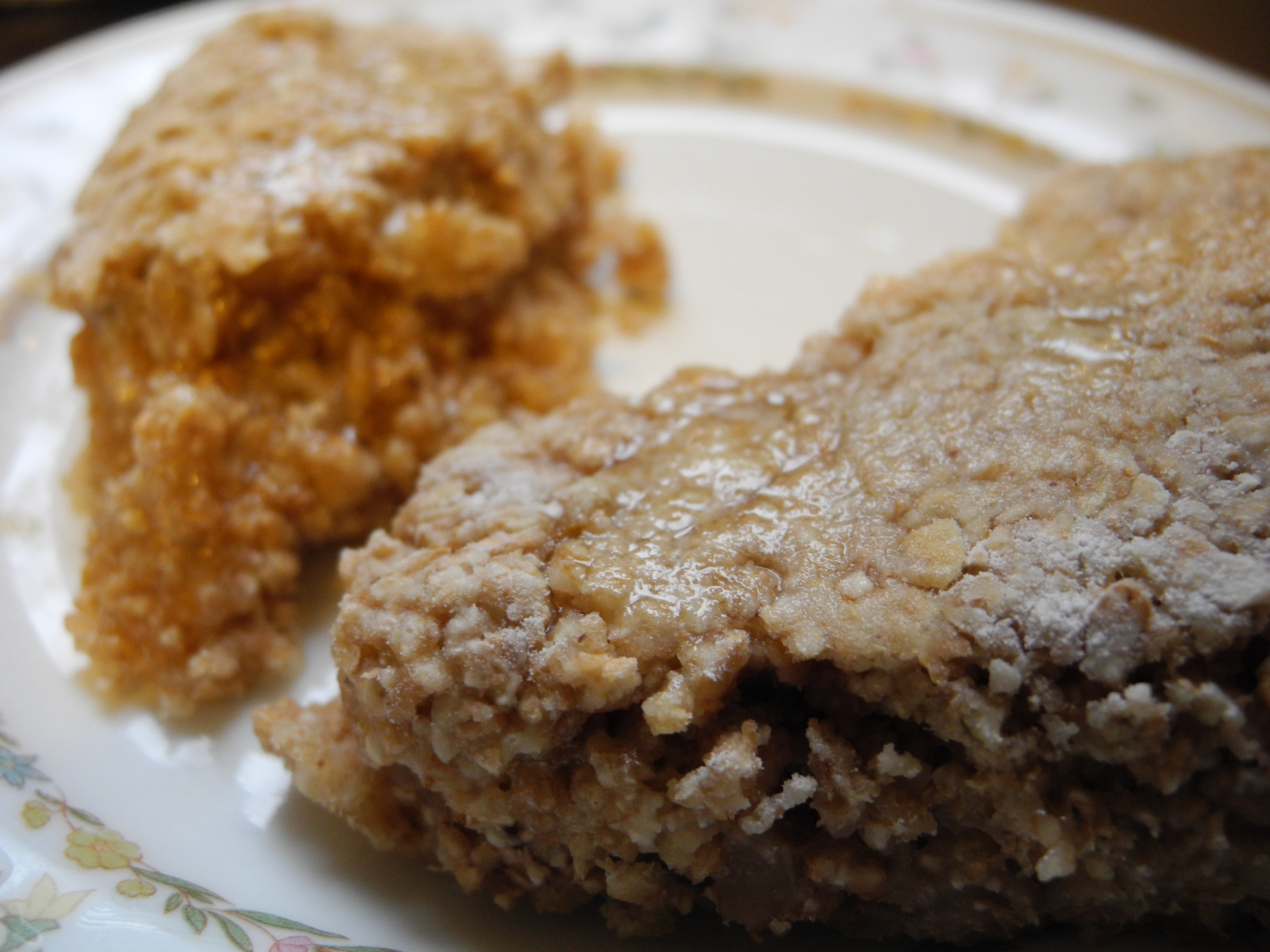
I started with scones.  The glorious slightly sweet biscuits open to many interpretations.  I find that my favorites include dried fruits (abundant here) and nuts (also abundant here).  So, on hand I had dried apricots, and walnuts as well as home made peach preserves and thick raw honey which served as the sweeteners.  I have been mixing very coarsely ground whole wheat flour with more finely ground flour for a hearty, textured product. I mix that with a small amount of unbleached flour, and oats. I followed the same recipe I have used for 15 years since it was born at the Good Life Cafe:

4 ½ cups pastry flour (approximately 3 cups whole wheat, 3/4 cup white and 3/4 cup oats)

2 tablespoons baking powder

1 ½ teaspoons salt

2/3 cup fruit sweetened jam, maple syrup, honey or a combination

½ cup oil or softened butter

1 cup coarsely chopped apricots (or other dried fruit)

1 cup coarsely chopped nuts

¼ cup lemon zest

1 teaspoon vanilla extract (optional)

½ cup fruit juice

½ cup buttermilk or yogurt

In separate bowls, mix together the dry ingredients and the wet ingredients. Then add the wet blend to the flour mixture and combine well. Dough should be soft but not sticky.  Place on floured surface, or a sheet of waxed paper, and roll or press it out to form a circle about ½ inch thick. Cut into 8 triangles like a pizza. Place triangles on an oiled baking pan (you can either oil the pan or cover with a sheet of parchment paper) and bake at 375 degrees for 12 to15 minutes.

This recipe makes 8 fairly substantial scones-you could make smaller triangles for more
After such a wholesome breakfast, it was time for, yep, dulce de leche!  I am exploring as many possible ways to use this substance as possible.  While I am pretty happy just dipping pieces of dark chocolate into it, I felt I needed to expand my repoitoire.  I went with a fairly basic chocolate cookie recipe, and tweaked it by placing a dollop of dulce de leche inside the middle.
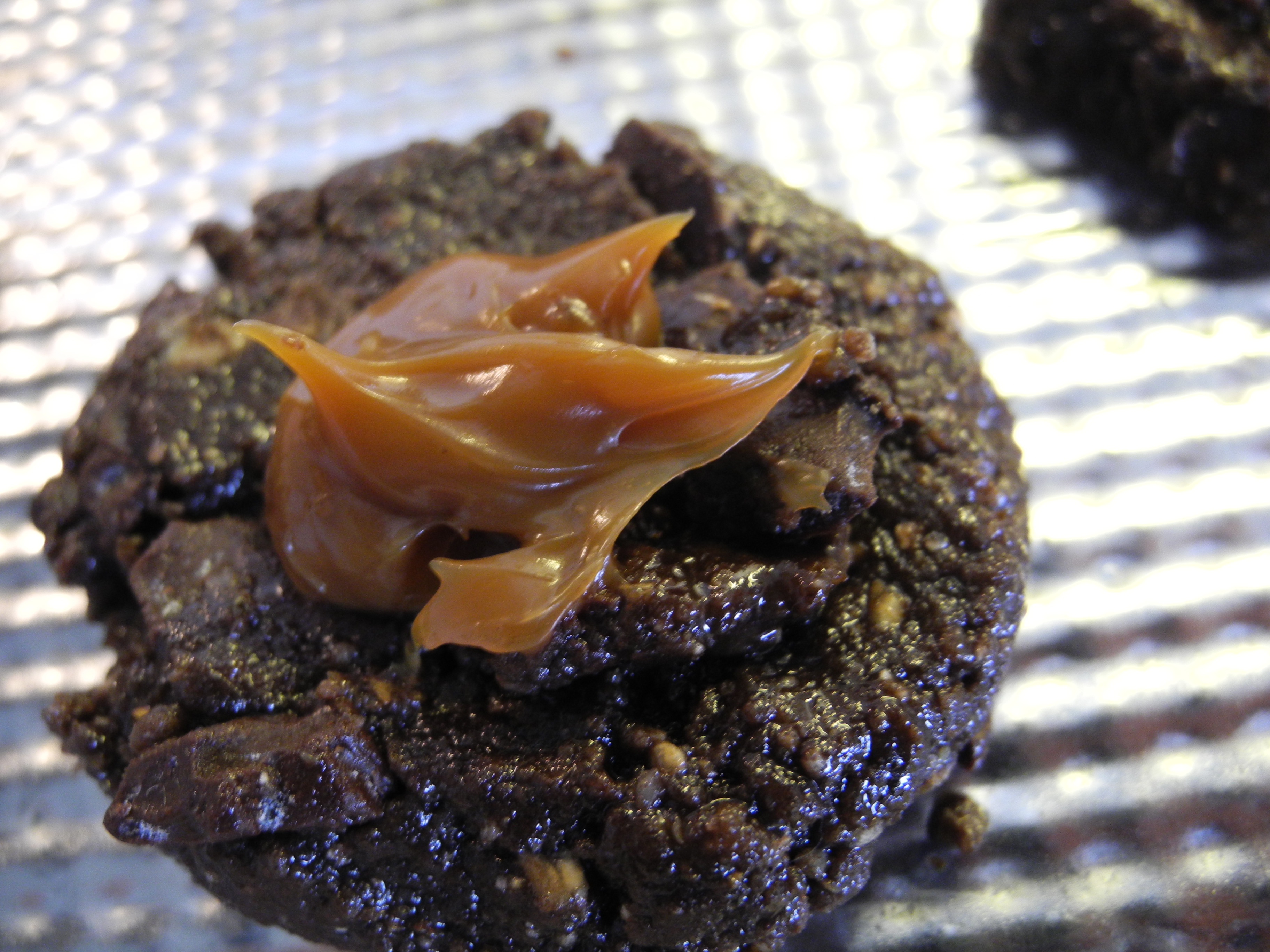
While these look pretty decadent, they are honey sweetened, and 3/4 whole wheat flour so they still have that wonderful whole grain texture and crunch.  I also roughly chopped pieces of dark chocolate for an extra surprise.
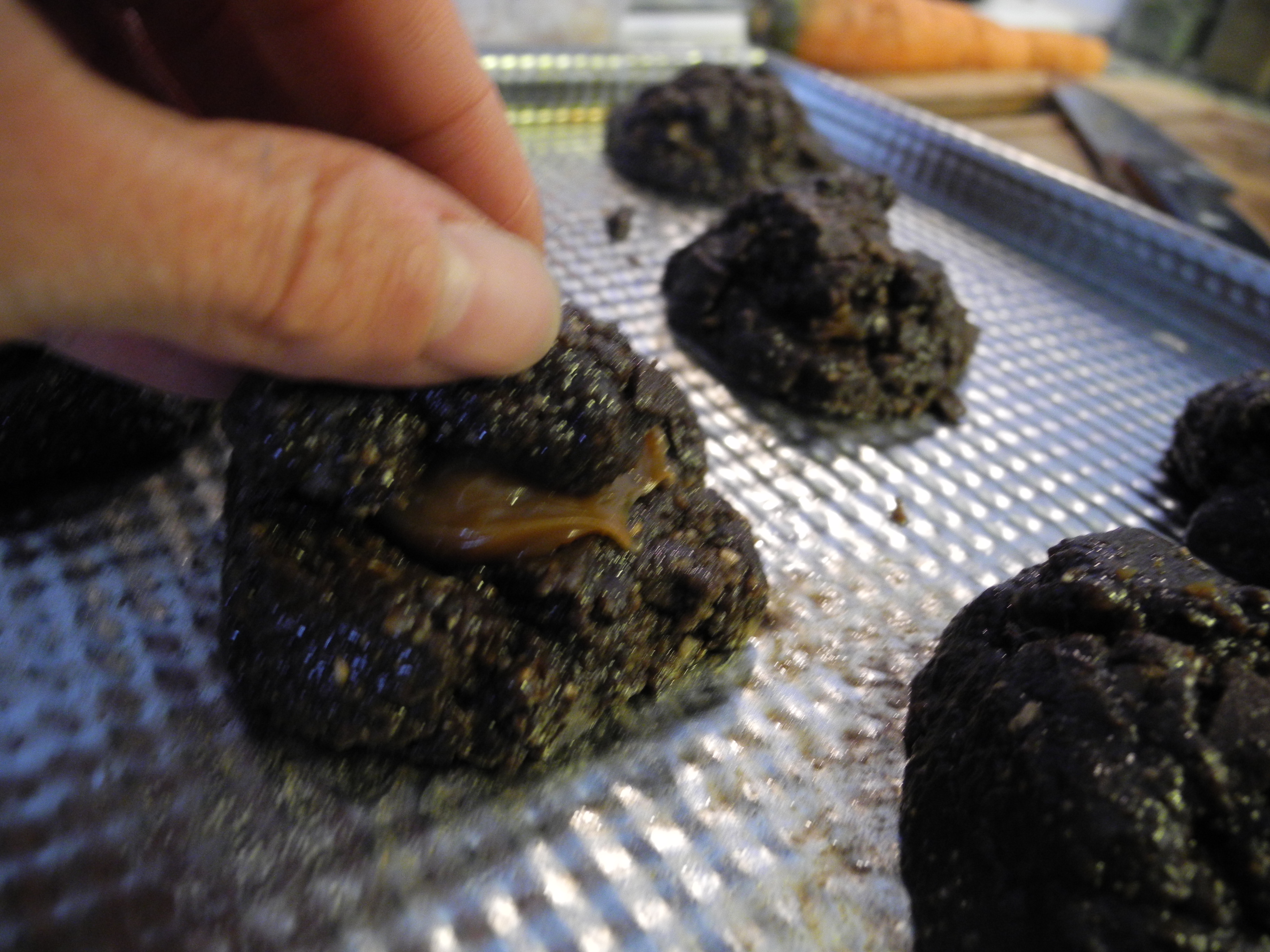
topping them off
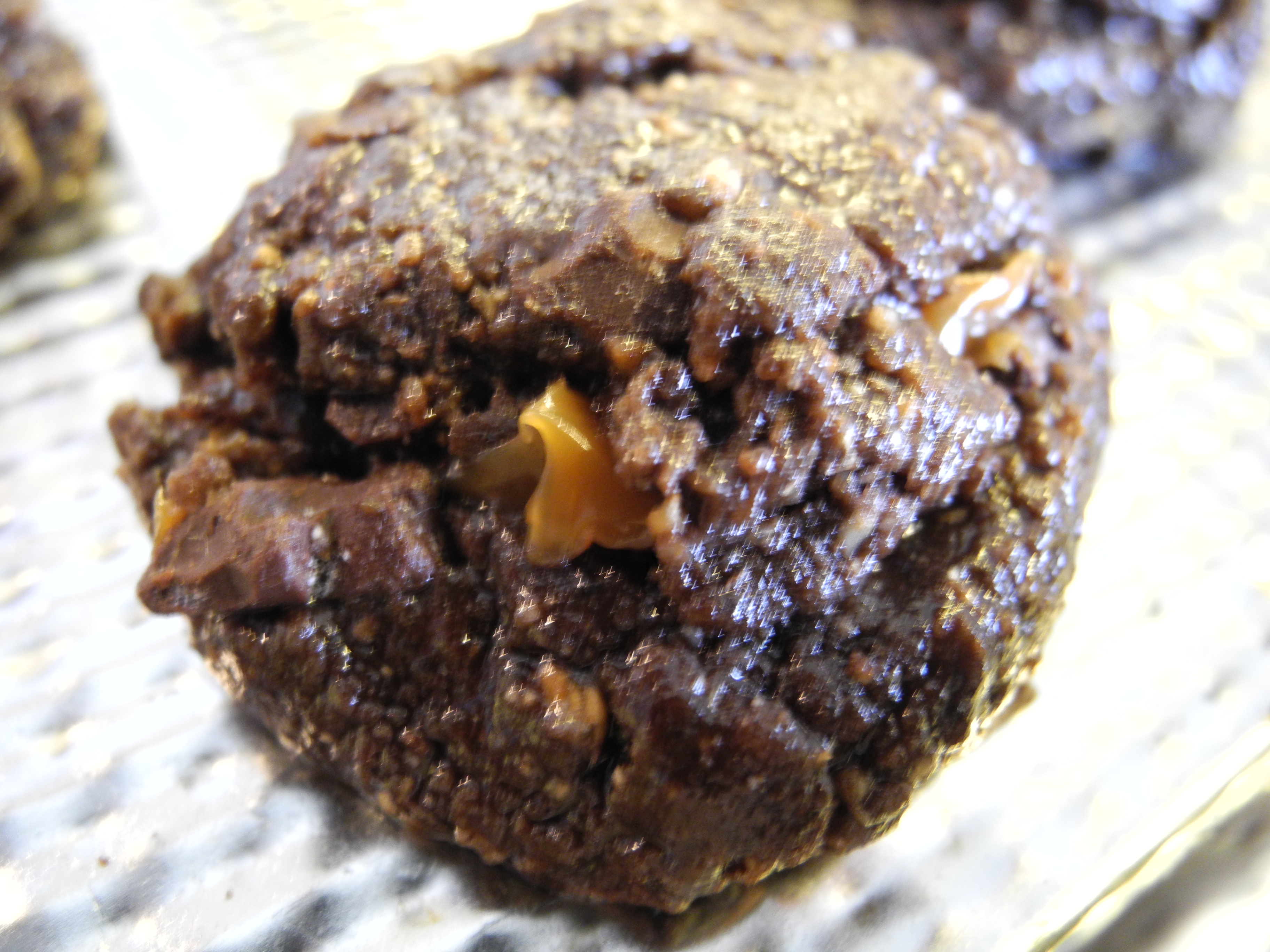
ready to bake!


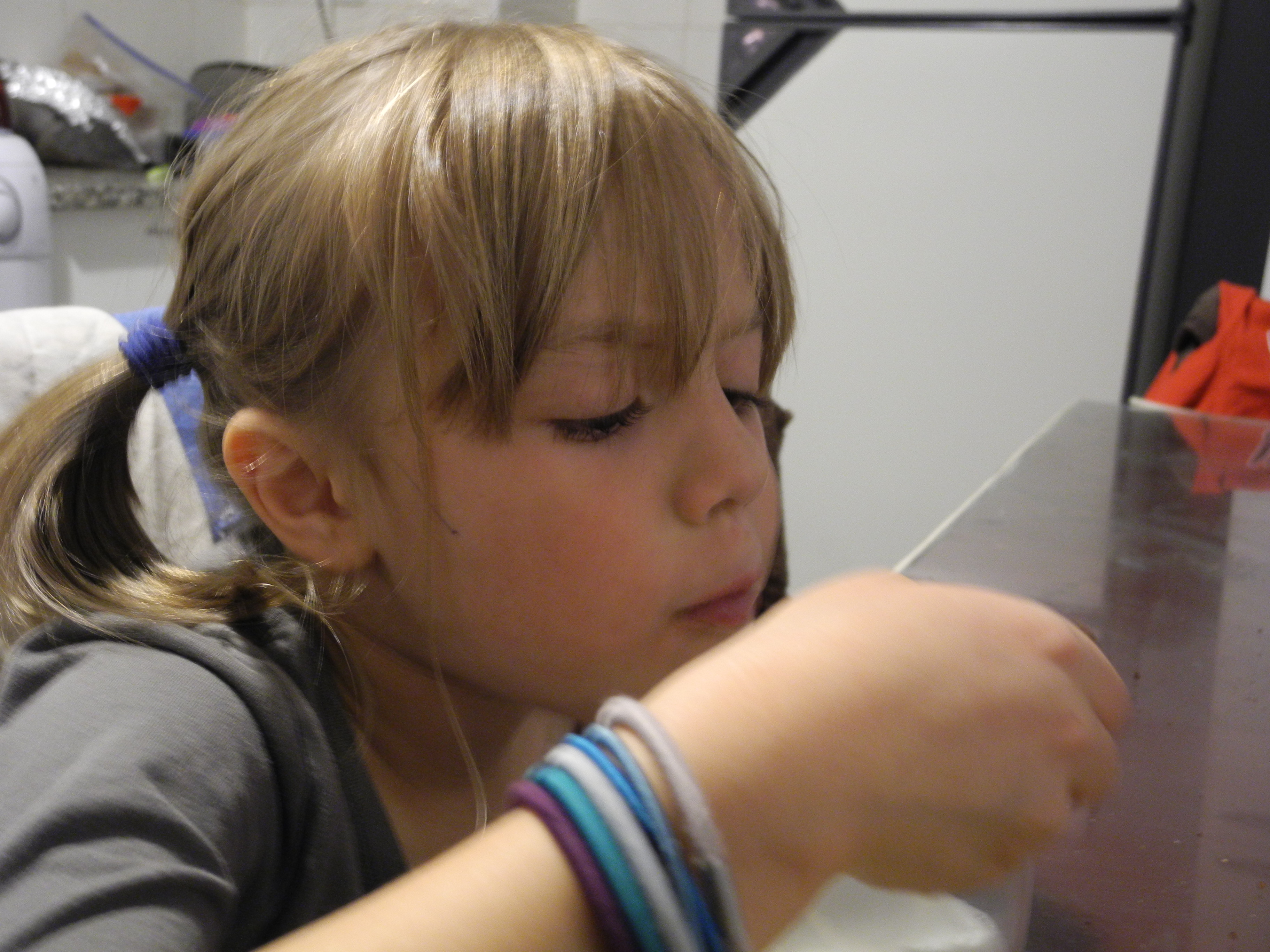
These cookies were quite delicious, though the dulce de leche was not as prominent as I would like.   I now understand why the dulce de leche is generally added after the cookies are baked, as in the classic alfajore.  That said, my cookie critics seemed perfectly satisfied with these, along with a nice cold glass of milk!


Double  Chocolate Cookies with dulce de leche

1/2 cup butter or oil

3/4 cup honey or maple syrup

1/4 cup raw sugar

1/2 cup cocoa powder

3 cups flour (2 1/4 c. whole wheat and 3/4c. unbleached)

1 tsp baking soda

1/2 tsp salt

1/2 cup roughly chopped dark chocolate

1/2 cup dulce de leche (a soft caramel product, or nut butter with a bit of honey or maple syrup would work as a good substitute)

Combine oil/butter, sweeteners and cocoa powder until well blended and without lumps.  Combine flours, soda and salt and add slowly to wet mixture.  The dough should be soft, but firm enough to manipulate with hands.  Mix in chocolate pieces.

On an oiled cookie sheet, form 3/4 of the dough into small drops about 1 inch across (these cookies will spread, so leave enough space).  On top of each round, place a dollop of filling and cover with another small amount of cookie dough.  You can use your fingers to spread the dough over the filling.

Bake 375 for about 10 minutes.
Read Full Post »


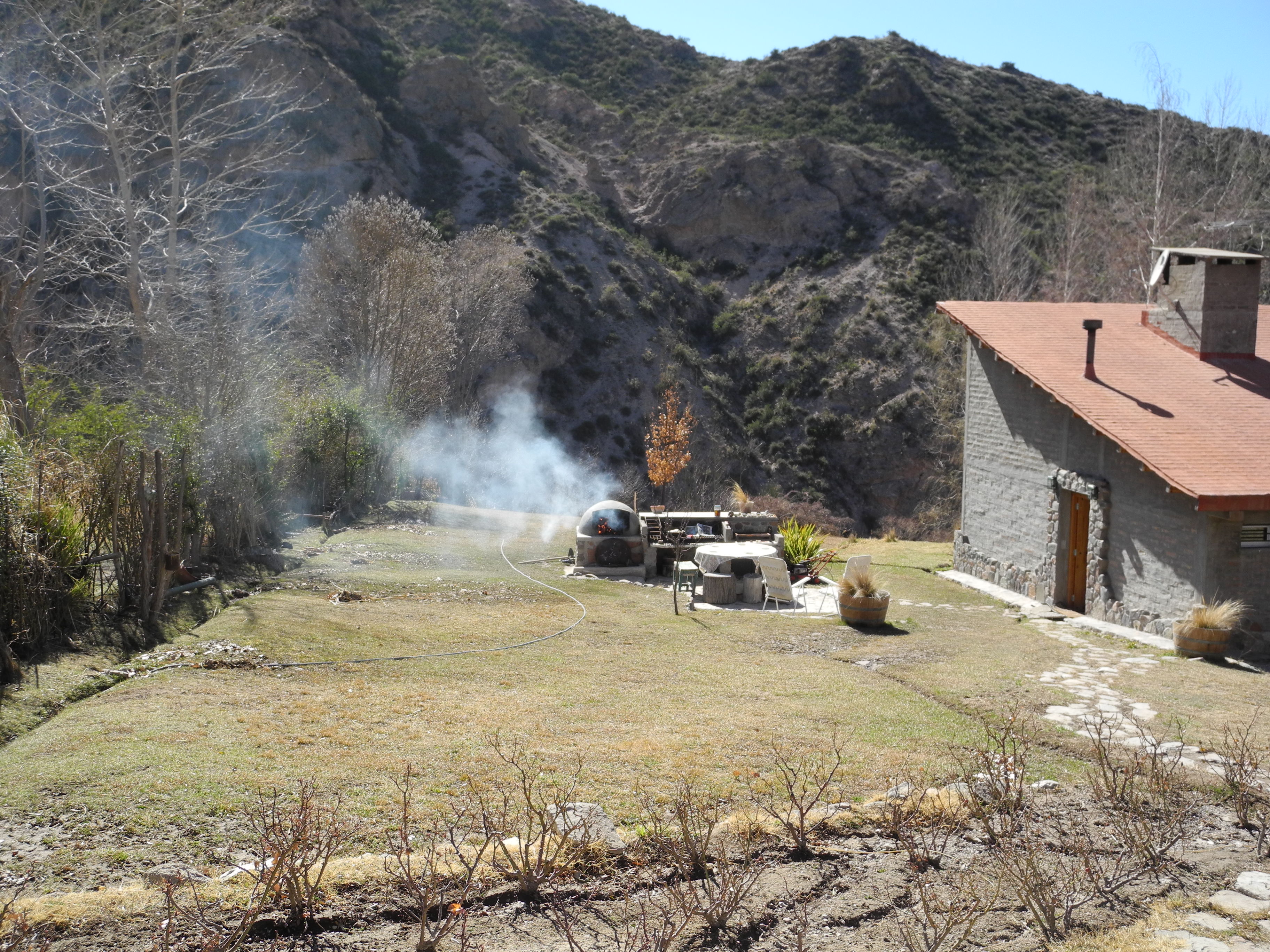
We have a beautiful view of the mountains from our apartment.  It is something I have never lived with before, and  I have quickly learned that just because you can see them, doesn’t mean you are in them.  It still takes an effort, or planning to get there.  Fortunately for us, our dear neighbor Marta, a retired schoolteacher who lives alone downstairs from us invited us to her cabaña (cabin) in a small mountain community called Portrellilos. It is about an hour away at the foot of the front range called the Cordon del Plata. We had no idea how lucky we were!  Marta, in her grandmotherly way (she has 7 grandchildren who live in Beunos Aires-about 8 hours away) nurtured us and gave us the ultimate Mendocinan treatment.  It was relaxing, rejuvinating, gorgeous and comforting all in one.

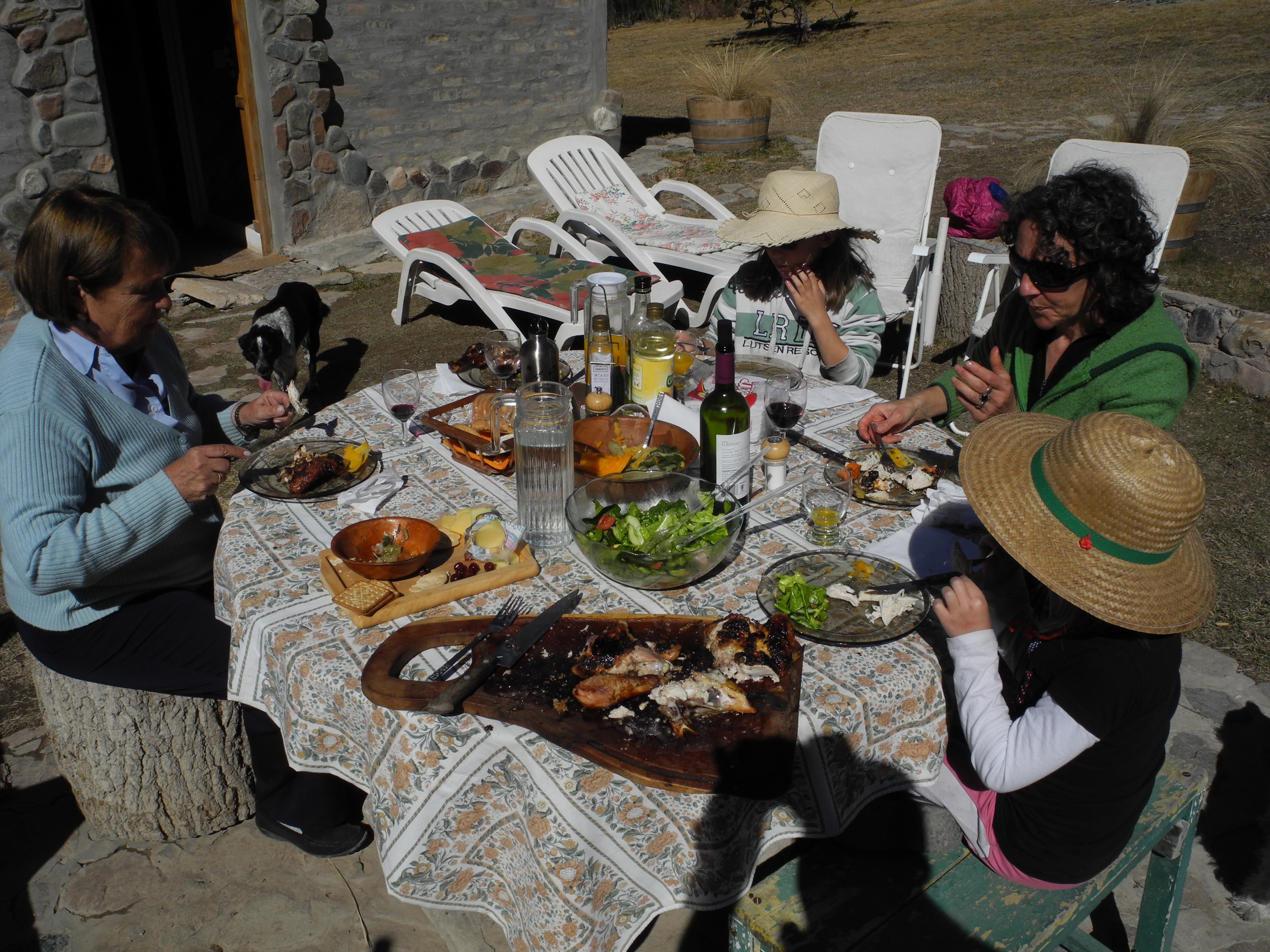
I am going to highlight our Sunday lunch, complete with simple chicken in the outdoor oven,  seasonal vegetables, fermented wild cherries and of course, a good malbec.

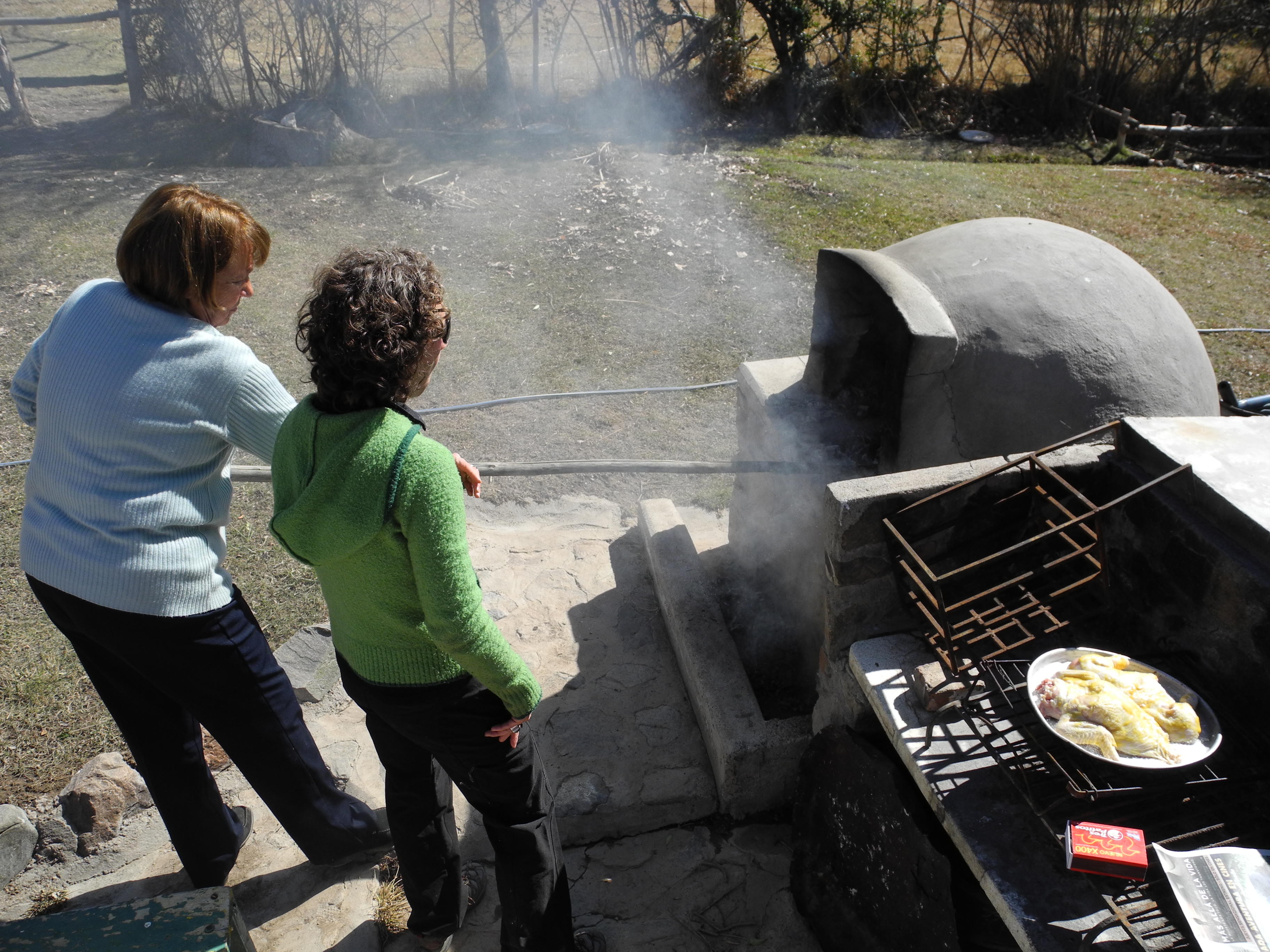
The cabin, the oven, and the mountains

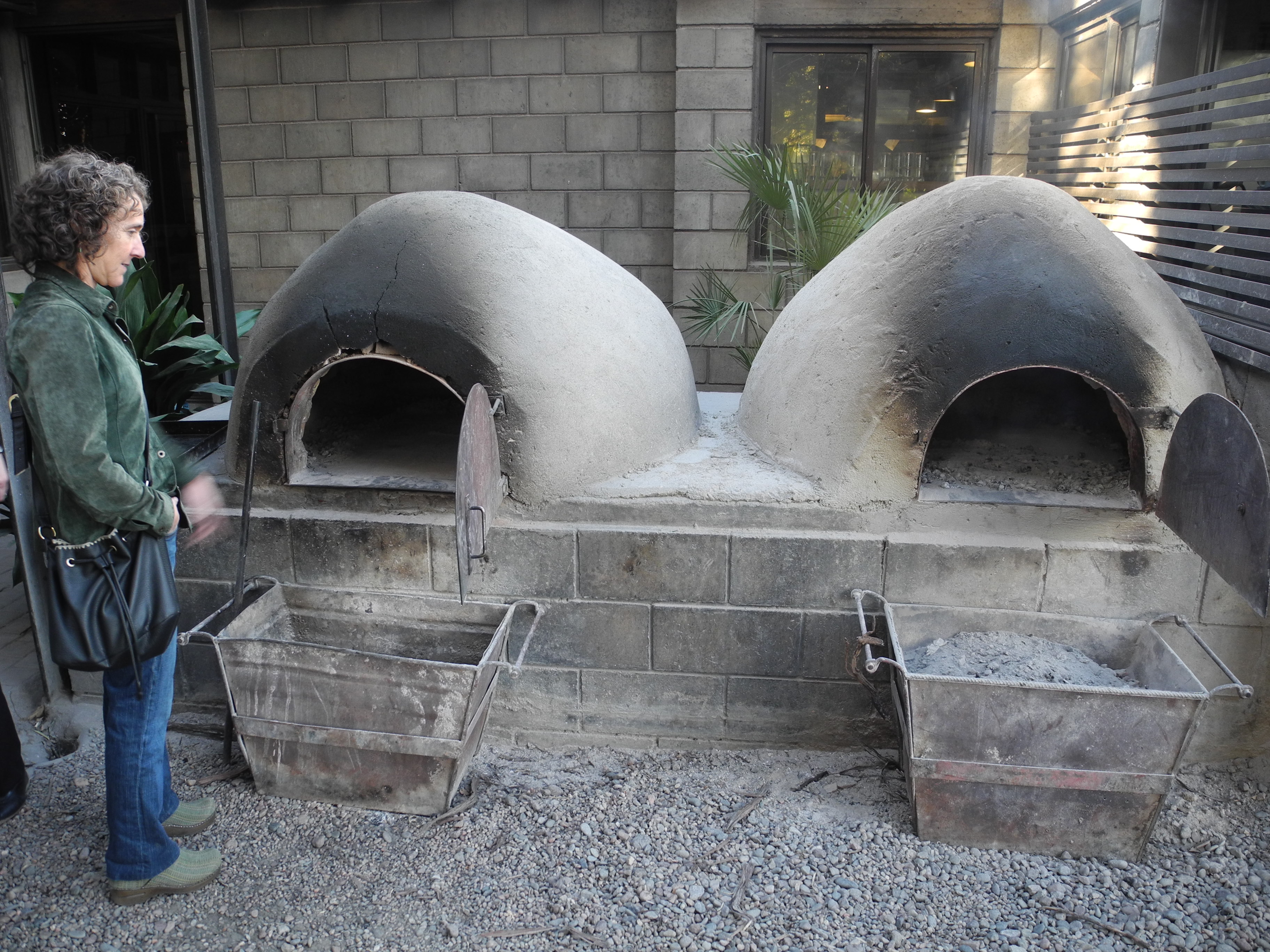
Marta started the oven while we were hiking in a nearby riverbed.  These outdoor adobe style ovens are ubiquitous throughout the region.  Even in the city, it is not uncommon to spot an outdoor grill of some sort as the ‘asado’ or grilled meat meal is ever popular here.

Me, getting schooled on the fine art of the outdoor oven

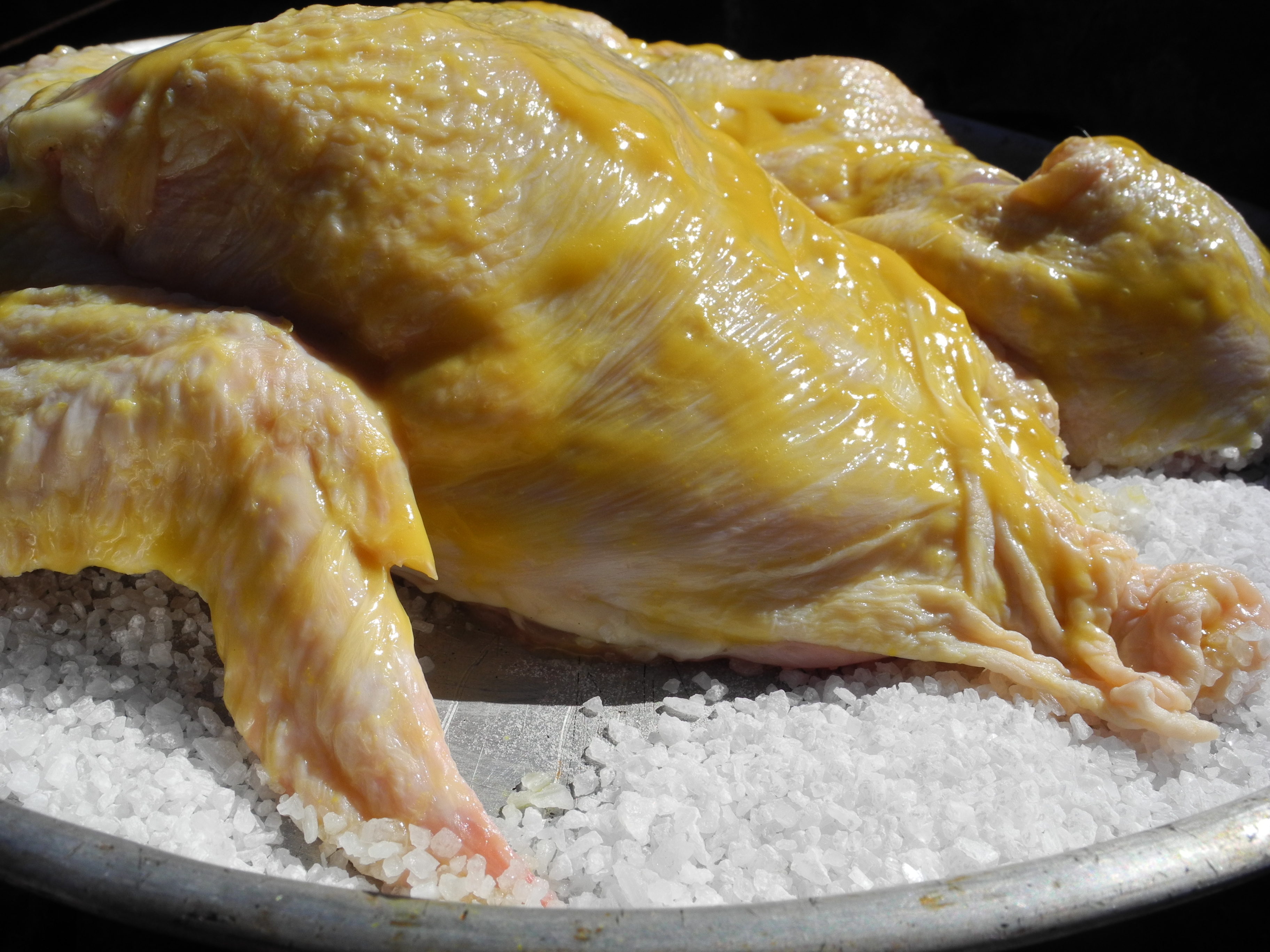
Our menu included the simplest of chicken recipes, one that I will repeat: A whole chicken coated with a thin layer of mustard, and covered thoroughly with LOTS of coarse sea salt.  That’s it.


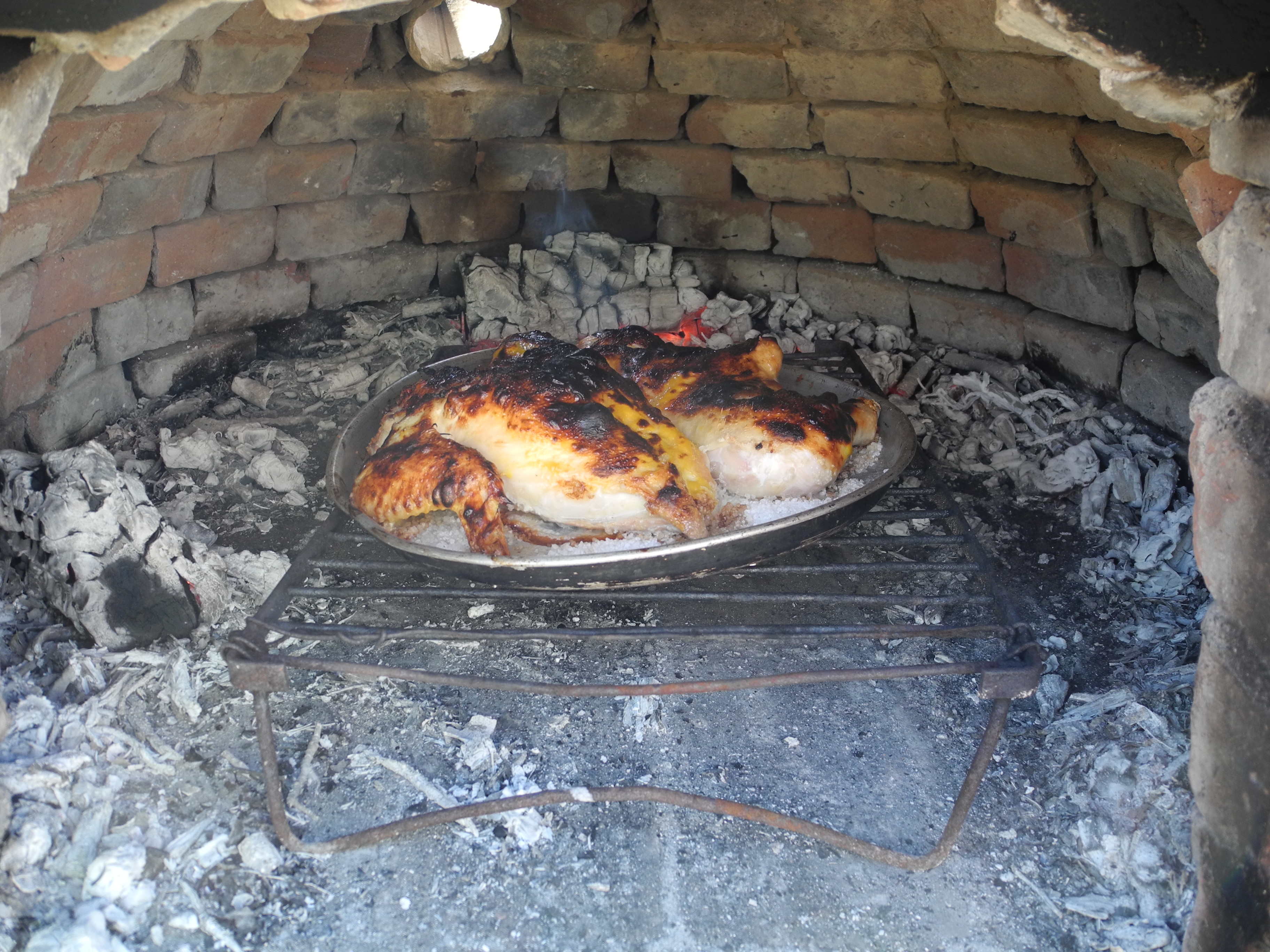
Marta cleared away most of the coals and used the heat contained within the oven to cook the chicken.  She covered the door in order to retain the heat and the chicken cooked quite rapidly-in about 25 minutes.


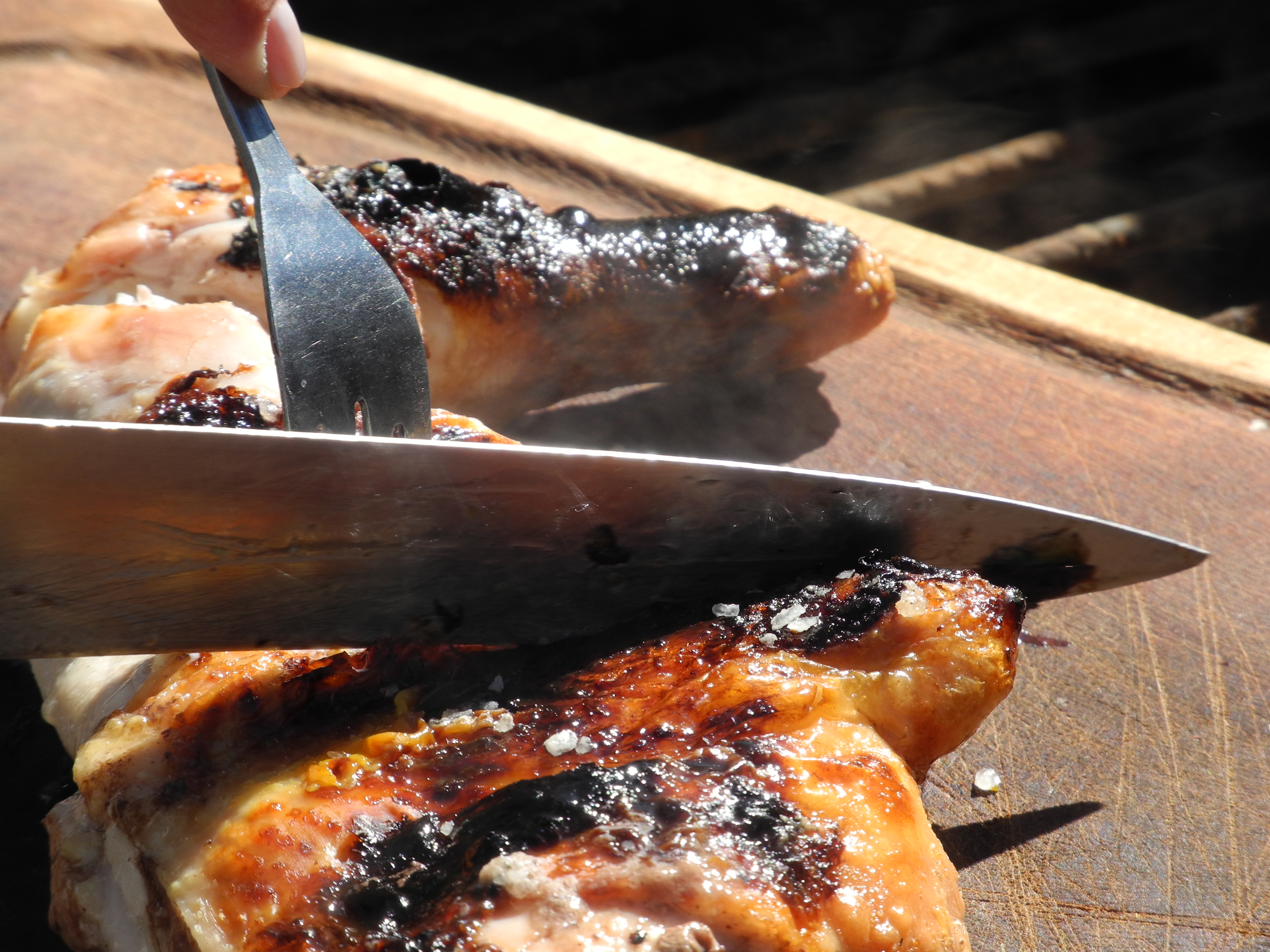
What was amazing was how the tang of the mustard mingled with the strong salty flavor which melted into the skin of the chicken, creating a dynamic, crunchy, outside with moist, smokey meat inside


Steaming hot from the oven!


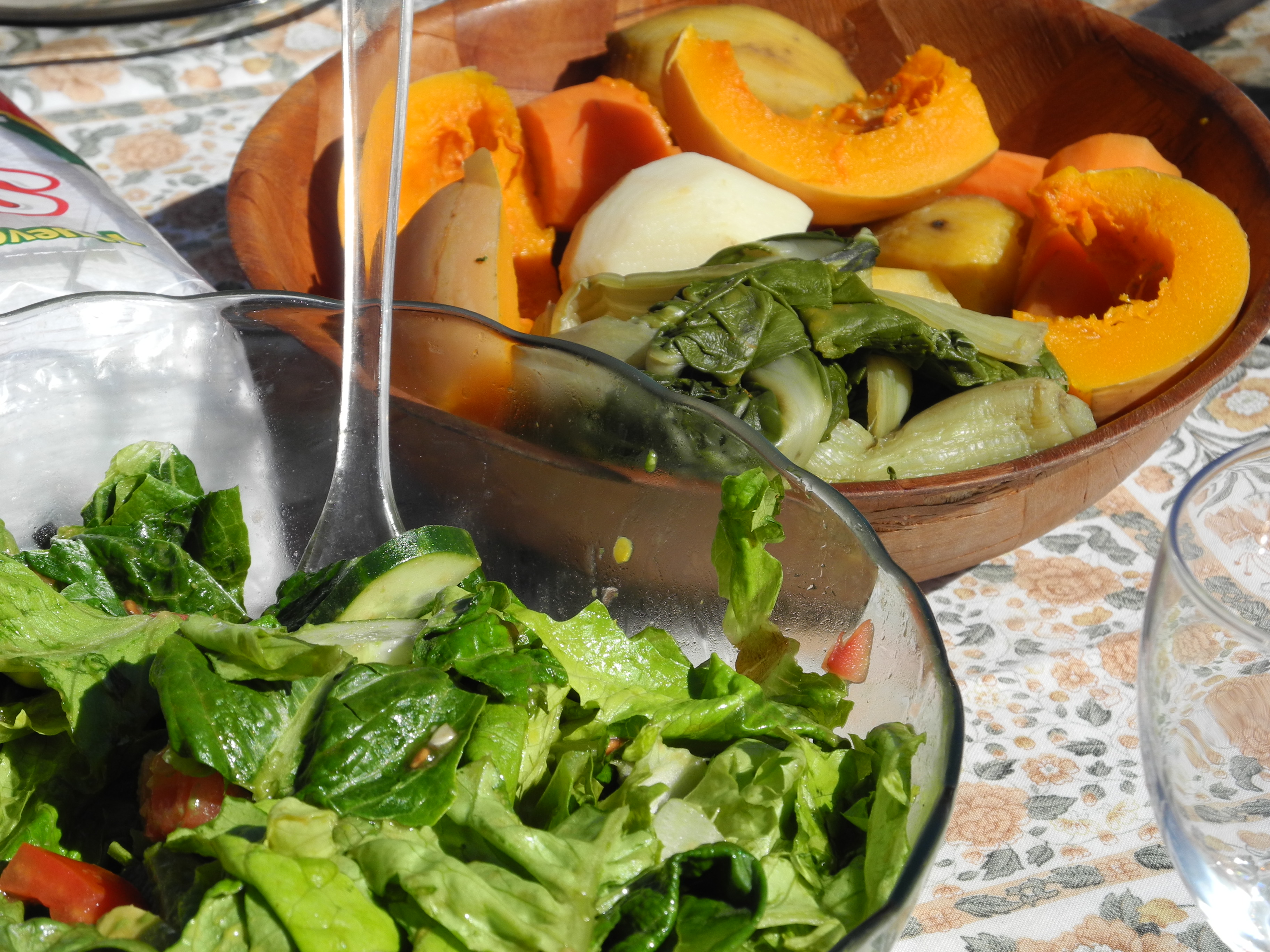
Contrary to popular belief, Argentinians have access to, and eat plenty of vegetables.  In addition to our bird, we had a beautiful salad with fresh avocadoes and tomatoes, and a mix of steamed squash, sweet potatoes, potatoes, and chard.  Simple, and perfect for a sunny, 60 degree winter day!


Traditional use of local ingredients is alive and well here and throughout the country.  Unlike in the U.S, where we receive so much imported food, here everything comes from here, they simply don’t seem to have the economic stability to bring other products in.  I believe there are numerous benefits to this, particularly when it comes to an authentic culinary culture.

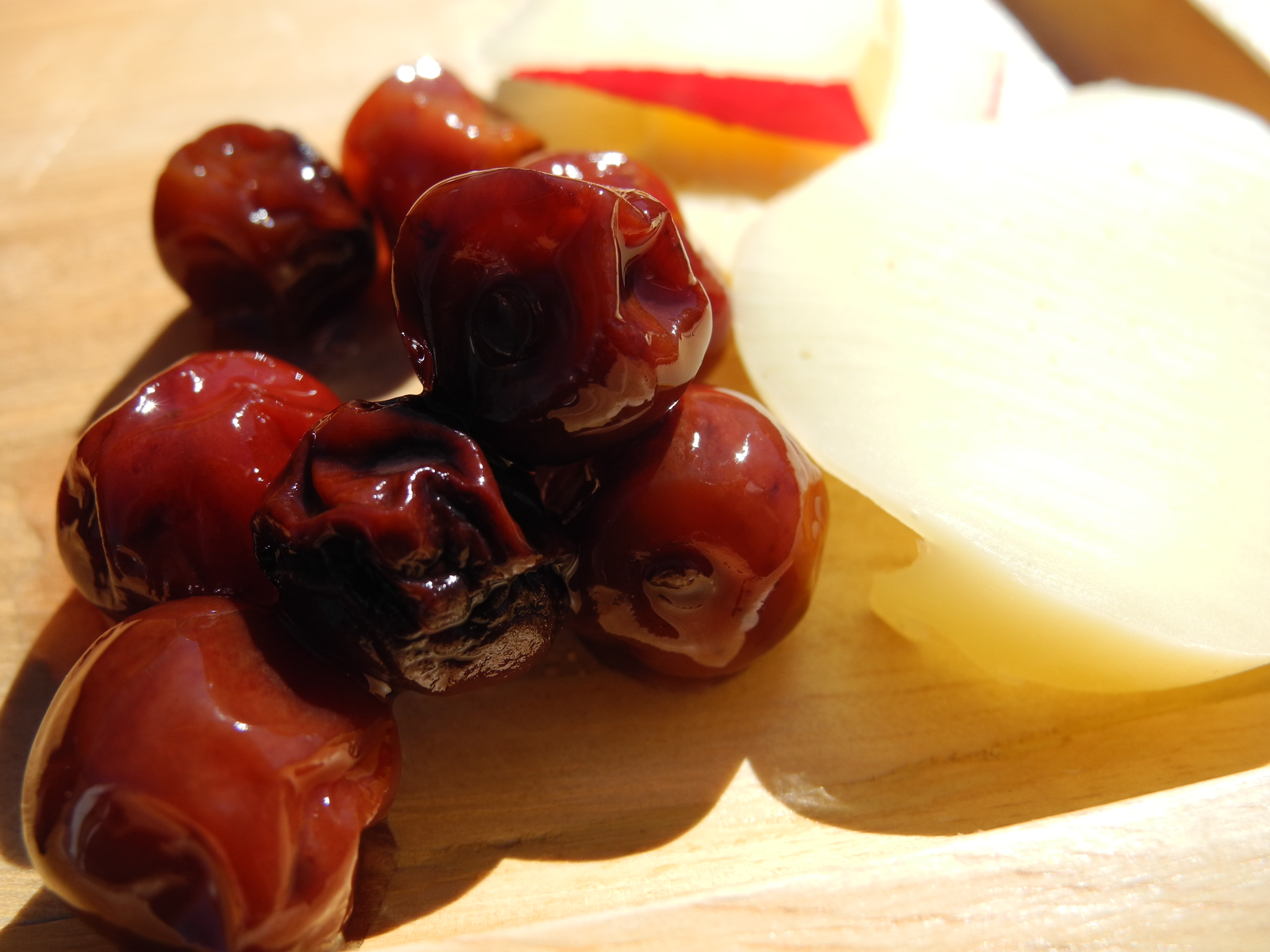
There are many fruits throughout the region, and you can find artesenal jams, pastes and preserves almost anywhere. Popular flavors are peach (durazno), quince (membrillo) and plum (ciruela).  I noticed an interesting jar on top of Marta’s oven which I mistook for olives.  Marta explained that these were ‘ginda’ which we finally figured out were wild cherries.  She had soaked them in sugar and water, and left them in the sun to ferment for a few weeks.  They were tangy and sweet, with a slight flavor of fruity alcohol.  Lovely with a nice gouda and some good crackers.

This meal was only part of a delightful weekend for us. It reminded me slightly of special visits to the north shore, with chilly nights, fires in the morning and beautiful time outdoors.  It was lovely to make a new friend and learn some new (old) cooking techniques!  I am fantasizing about how to build one of these ovens in our back yard!  The most important thing for me, and something I am learning about the Argentinian culture here, is the strong tradition of sharing a simple meal together.  Family and food are the backbone of most socializing here, and it is a wonderful thing to be a part of!


Read Full Post »

Cooking up the Good Life

Perhaps this is shameless promotion.  It has been a month since I left Minneapolis, essentially disappearing in the middle of a book promotion frenzy.  I gave it four good months, did cooking demos at Farmer’s Markets, book signings from Red Wing to Stillwater, radio interviews and other fun things.  It was a blast!  I had a great time presenting delicious, seasonal, simple whole foods to people and offering excitement and inspiration for getting into the kitchen.  It is not hard for me to share my enthusiasm and love for creating good food-it is what I do, and what I have done for the last 25 years of my life.

This joy culminated into my book “Cooking up the Good Life, creative recipes for the family table” published in April by the U of M press (see the link at right).  My wonderful co-writer Susan Thurston has taken up the slack, and is making her way across Minnesota promoting the book.  I am so thankful for her, for our easy collaboration and for her appreciation and understanding of me and my food.  And I am longing to be traversing the state along with her, sharing this joy with fellow Minnesotans and proving that our frigid, fickle and unpredictable state produces some of the best food anywhere!

If you haven’t bought the book, I recommend it. For the price, the unusual, interesting, kid-friendly and tasty recipes are worth it.  If you have, let me know what you think!  And in honor of the book, here are two of my favorite recipes: CARROT CASHEW PATE and GREENS WITH MISO DRESSING AND TOASTED ALMONDS. I use these recipes as teasers, hopeful that once people taste them, they will have no choice but to buy the book!!!  It is still winter here in South America, and while the produce is pretty fantastic, I am missing this season in Minnesota!  Happy cooking!

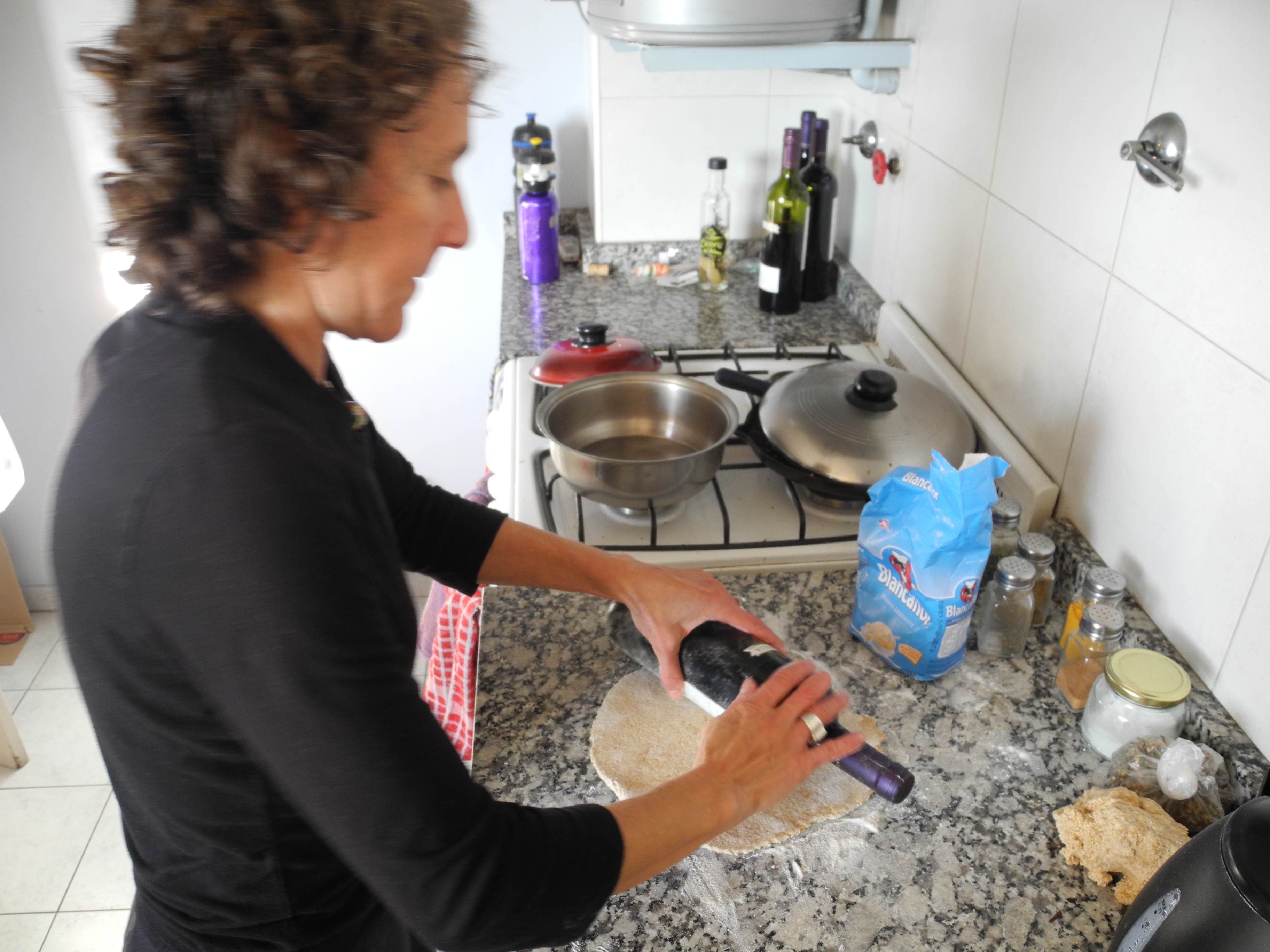
Finding plenty of good uses for wine bottles!

Carrot Cashew Paté

[VEGAN]

This may be the most popular pate that I have ever invented. It is bright and colorful, creamy, sweet—and addicting. It is rich, but light enough to keep eating. An ideal summer spread, it goes great with almost anything, and brightens up any meal. The miso adds a subtle, yet flavorful touch to this recipe

The Family Kitchen: This is definitely a recipe to please children. Kids love carrots, but they are not used to seeing them as a spread, so the transformation is exciting. They can spread it on crackers, toast, bagels, vegetable sticks, chips or fresh baguette.

3 cups carrots, chopped

2 cups water

1 cup unsalted cashews

2 cloves garlic

1/2 tablespoon miso paste

1 teaspoon celery seed

1/2 teaspoon salt

Cook the carrots in a steamer using 2 cups water until very soft, drain (reserving 1/2 cup of the cooking water), and set aside. In food processor, chop garlic cloves and cashews. Add miso paste, carrots, and water (a little at a time) and spices. Puree until well blended and creamy. You may need to pulse this mixture in the processor and scrape several times in order to capture all the small carrots pieces that get missed. Or, just pay attention to them when serving—they can be a fun, sweet surprise)

Makes 5 cups

Greens with Miso Dressing and Toasted Almonds

[VEGAN]

This is the recipe that I use in cooking classes to prove to anyone that I can get them to eat leafy greens.  People love this combination of sweet, spicy, savory and sour. The toasted sesame oil is balanced by the rice vinegar, which is complemented by the miso, and tempered by the maple syrup, which works perfectly with the mustard. All of it is topped off with the crunch and flavor of the almonds. The dressing also is delicious on just about any vegetable, and even on proteins like tofu and fish.

The Family Kitchen: Crushing almonds can be fun. You don’t need to use a knife or a tool at all. My favorite way to do it is under the bottom of a jar. So far it is the most efficient method I have found for crushing toasted nuts.  Kids can also use a rolling pin.

2 pounds assorted greens (such as arugula, mustard or spinach), well washed and dried

2 medium onions or 2 washed leeks sliced

6 cloves garlic, minced

1 inch ginger, peeled and minced

2 tablespoons olive oil

2 tablespoons toasted sesame oil

2 cups sliced or crushed almonds, toasted

Miso Dressing:

1/3 cup rice vinegar

2 tablespoons honey or maple syrup

2 tablespoons stone ground mustard

½ cup miso paste

2 tablespoons toasted sesame oil

1/3 cup olive oil

2 teaspoons tamari

In a saucepan, heat the oils over medium heat, add onions and sauté for 2 to 3 minutes until soft, then add garlic and ginger. Add the greens handful by handful, stirring constantly. Sauté until all the greens are added and they have wilted into a bright green—about 2 minutes. Remove immediately from heat and place in a large bowl. Allow the mixture to cool, add the toasted almonds. In a small bowl, whisk together all the dressing ingredients, then toss with vegetable mixture.
Serves 8 to 10

Read Full Post »

Vino

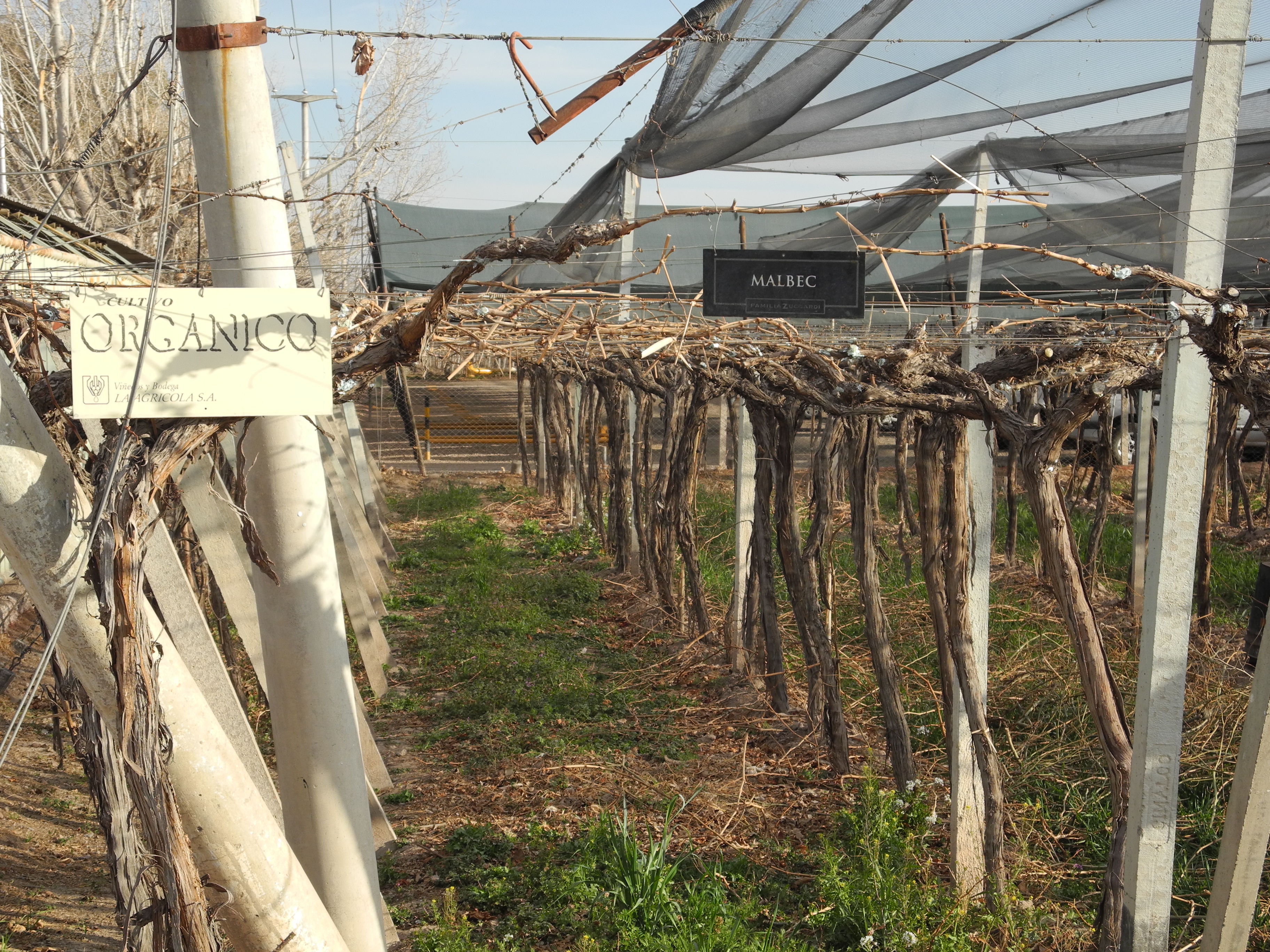
It turns out that our landlady is the personal assistant to Mr Zuccardi, owner of Zuccardi family wineries in Maipu. The winery sits in one of the biggest wine regions in Mendoza province-about 35 kilometers east of Mendoza city in the flat, arid fields alongside olive and cherry groves. It is winter here, so the grapevines are pruned back, and the fields look barren and gray, but beautiful in a calm and quiet kind of way.
The winery has a commitment to sustainability that includes being “a company which bases all its decisions and production and commercialization processes upon a respect for the soil, the air, the flora and fauna, and the whole community”.  Much like in the United States, organic certification is a rigorous and expensive process for many producers who are already using sustainable practices.  Such is the case with Zuccardi, yet 30% of their wines are certified organic.


the dark sign says "malbec"

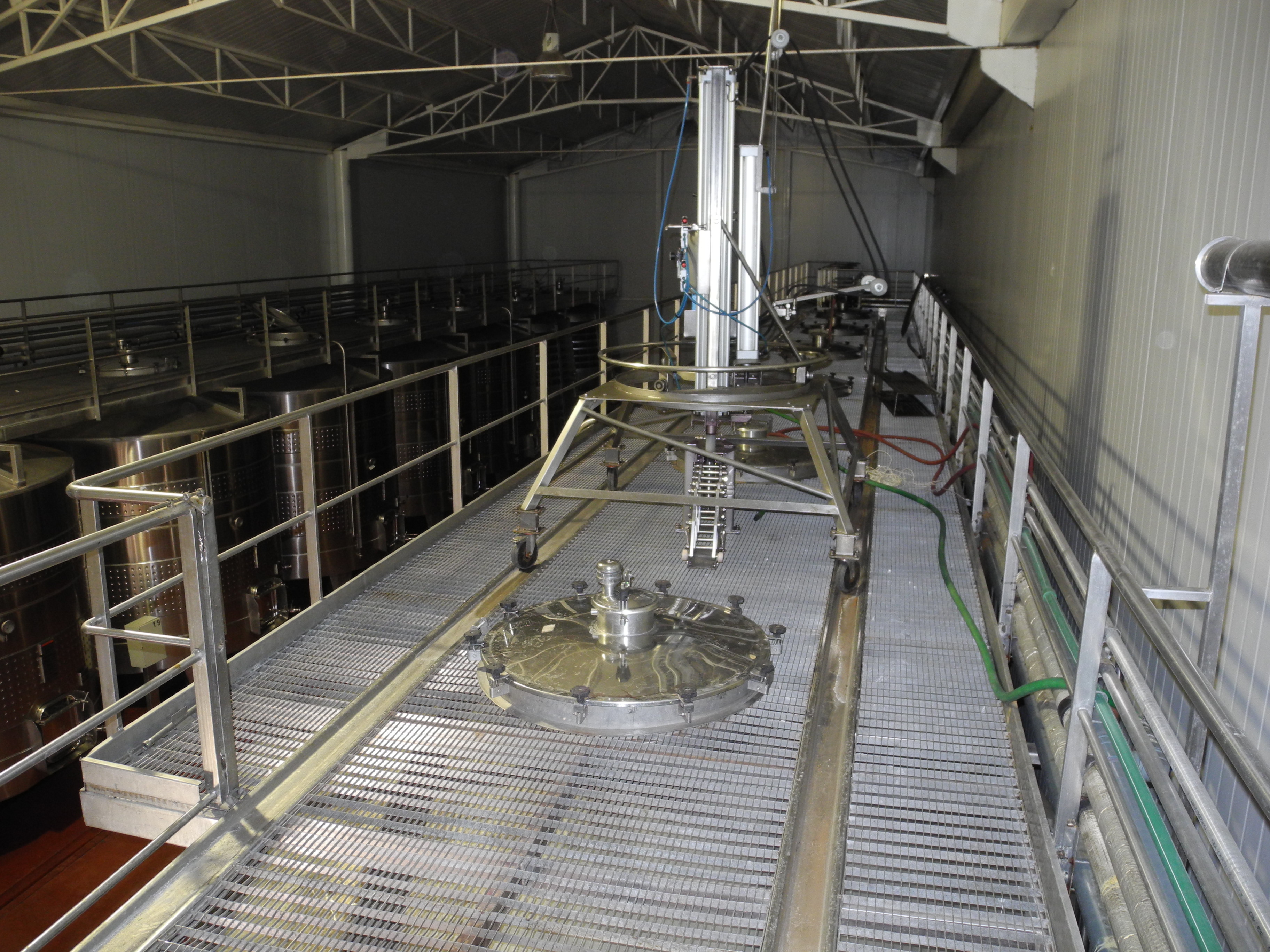
We were able to tour the production facility on a quiet Sunday afternoon.  While there was no actual winemaking taking place, we learned a lot about how the various machinery works, and how much of the process is still done by hand.  At the peak of production, there are  up to ten people standing over the conveyor belts picking through the grapes in order to remove any over ripe, or oversized grapes.  For their top level wines, they have even developed a robot that simulates the grape stomping process within the tanks of macerating grapes. And, after going through the de-stemming machine, the stems are composted and ultimately returned to the soil where the grapes are being grown.

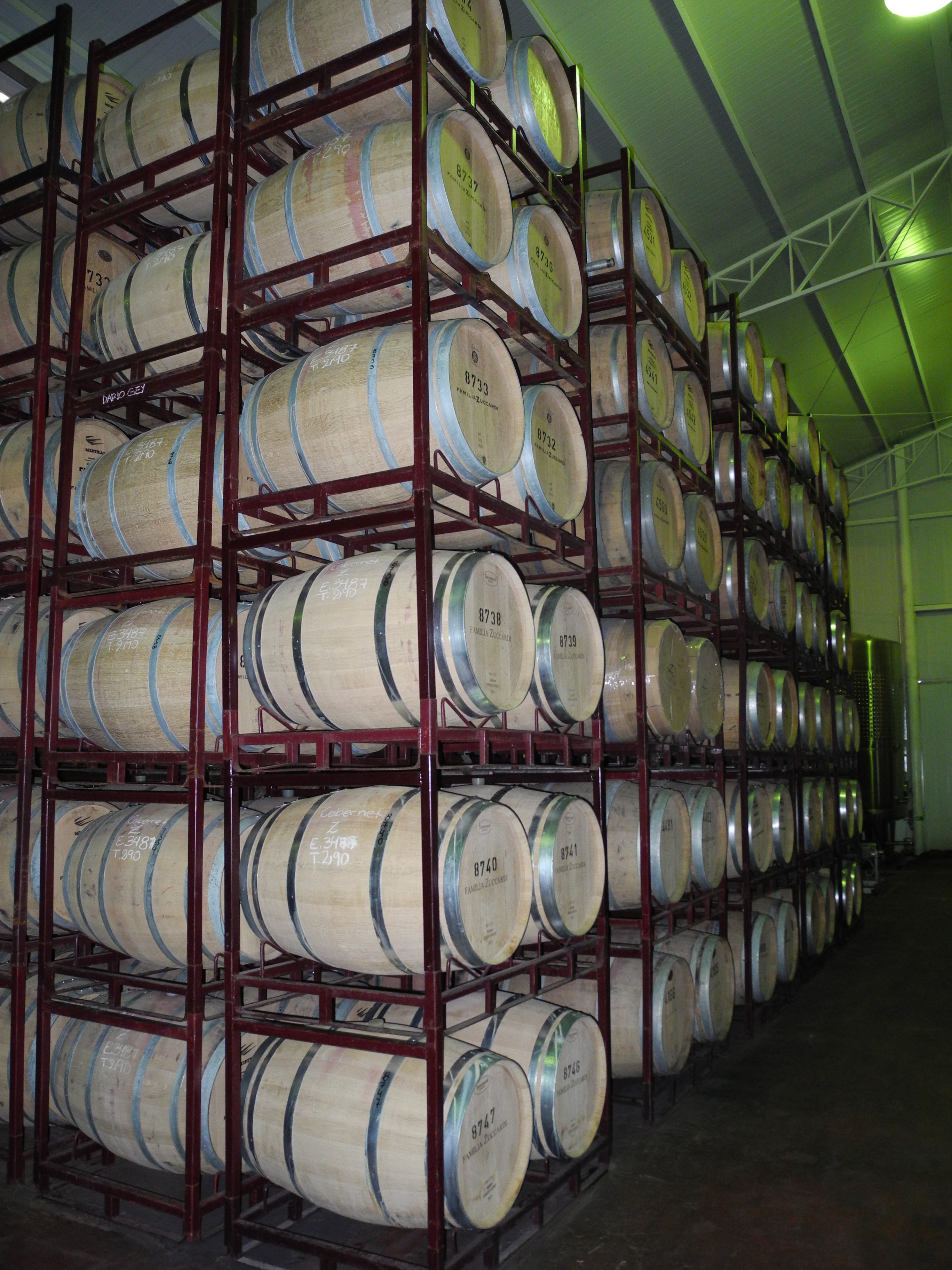
These wines are stored in fresh American Oak as opposed to French Oak, which apparently has a very different flavor.  The rooms carry a delicious aroma combining the muskiness of the barrels with the sweet and slightly sour smell of the fermenting grapes.


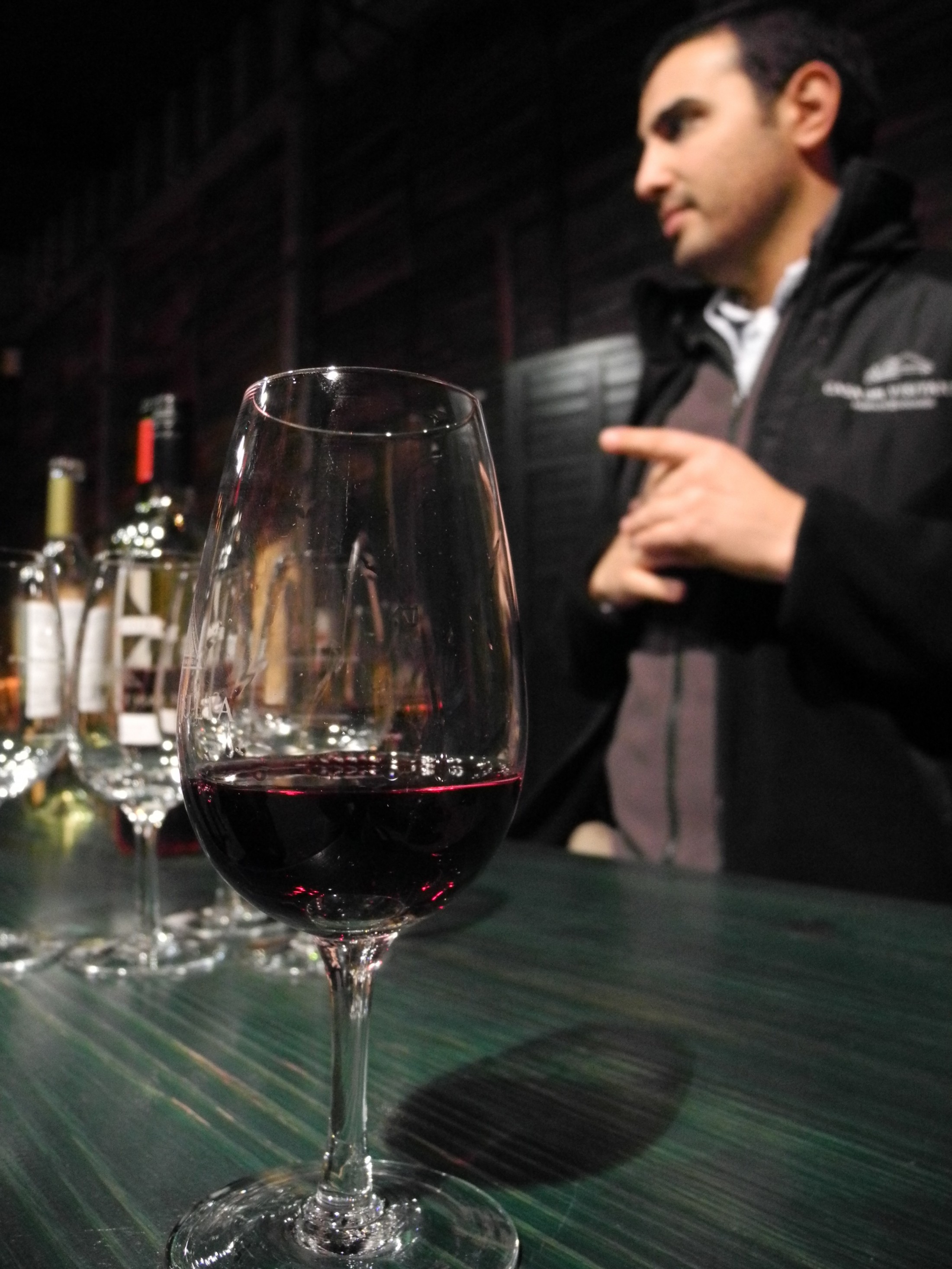
There were so many things to appreciate about this visit, from the personal attention we recieved to the beauty of the buildings, the artwork and of course, the wine.  I tasted only 3, leaving many still to explore.   We started with a Viognier from their young ‘Santa Julia’ line.  It was lovely, grapey and light.  Then we had a Petite Syrah also from the ‘Santa Julia’ line that was fruity, cool and refreshing but still complex enough to complement a light meal. And finally, while I am not an expert, their top of the line ‘Zuccardi Q Malbec’ was one of the best Malbecs I have tasted.  It had a smooth almost smokey underlying scent of oak, with a full, sweet, but not overly sweet, cherry flavor. Yum.

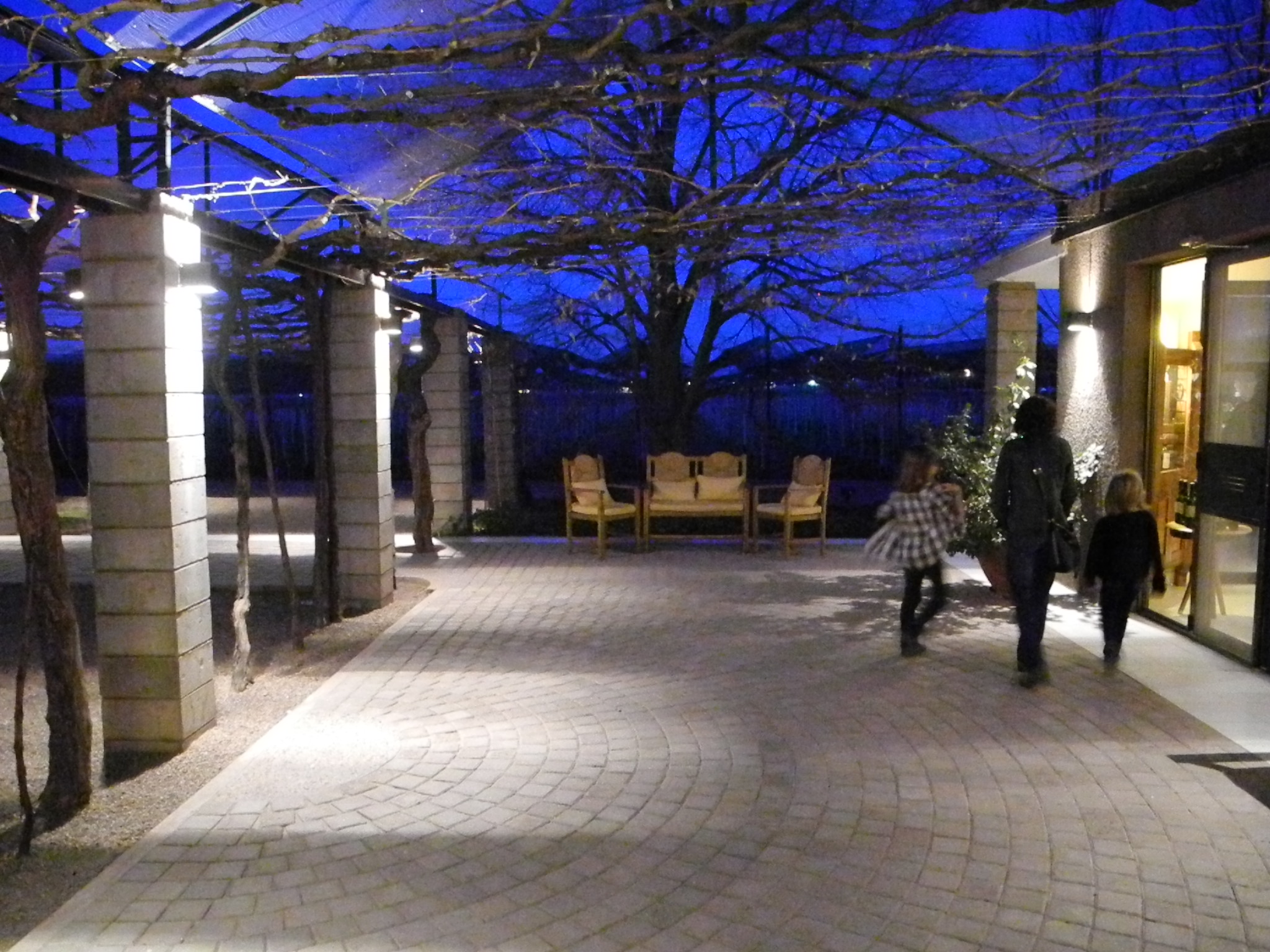
As if this wasn’t enough, we finished the visit with a “tea” at the tea house/reataurant.  This is a gorgeous stone building sitting in the middle of the vineyard where lunch and dessert are prepared daily for visitors.

Fresh breads are prepared daily in these gorgeous ovens

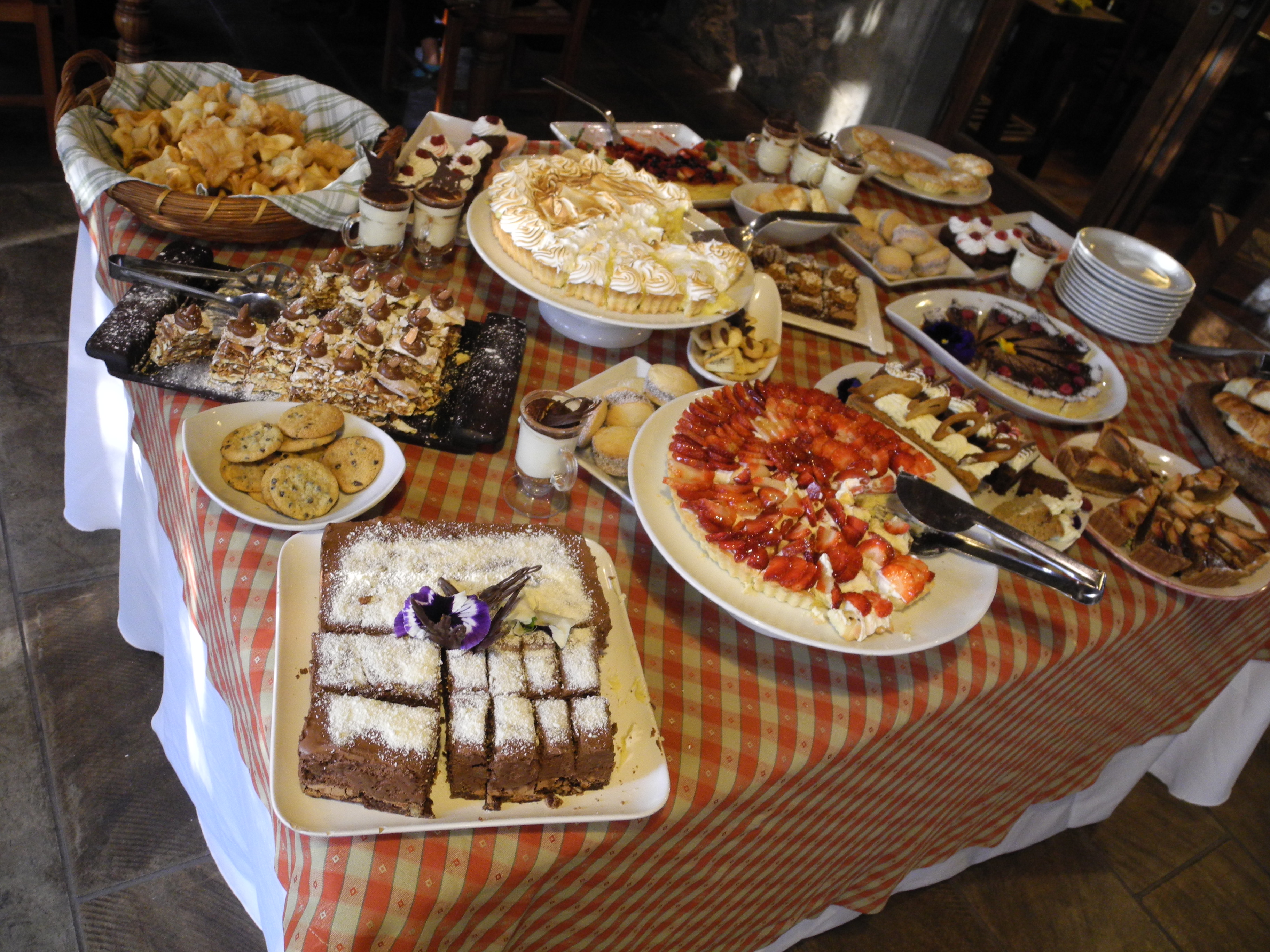
In Argentina, tea time is also dessert time….so there were a few choices:

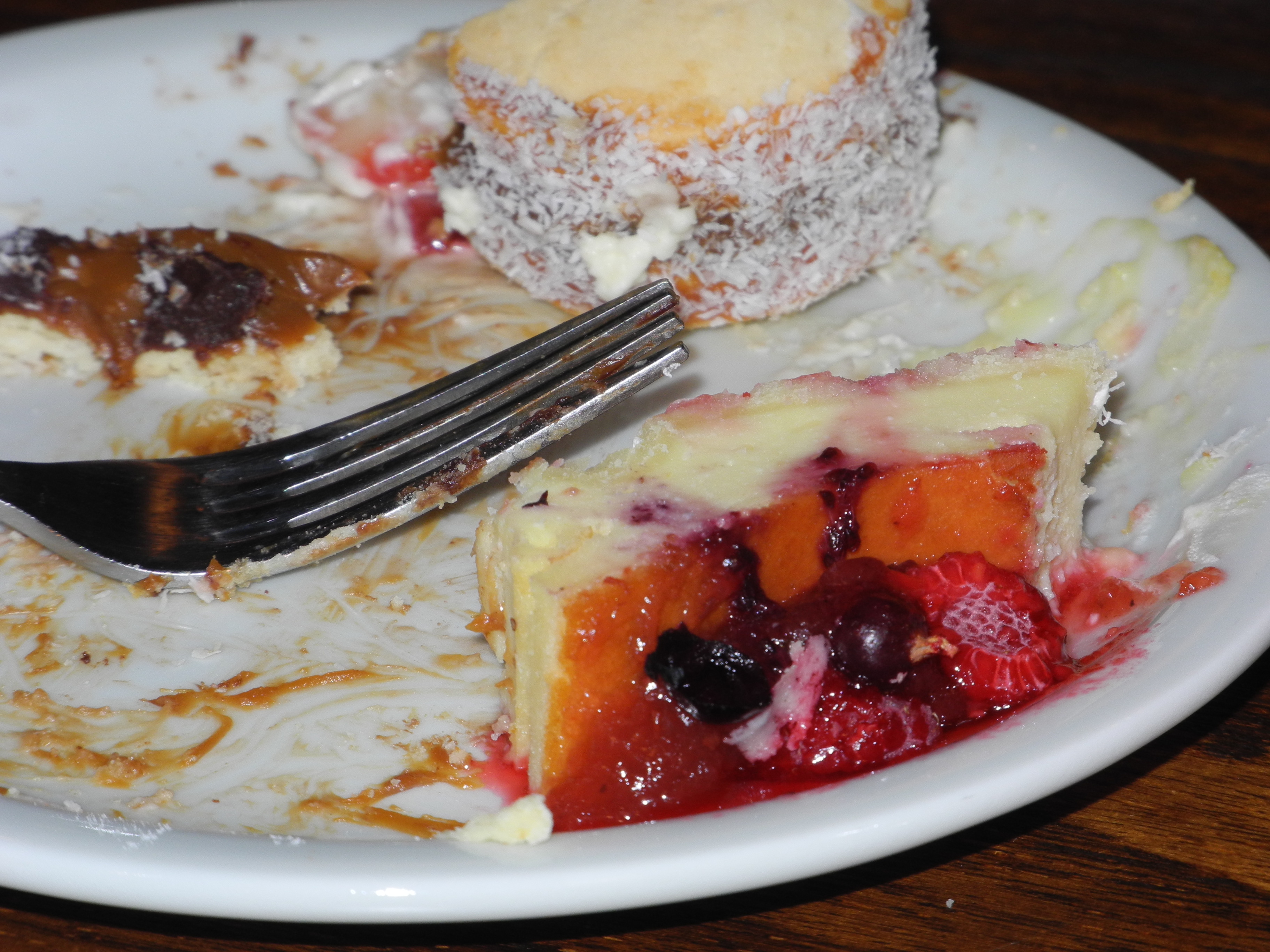
Suffice it to say that none of us had any trouble finding one or two (or five) things to enjoy!

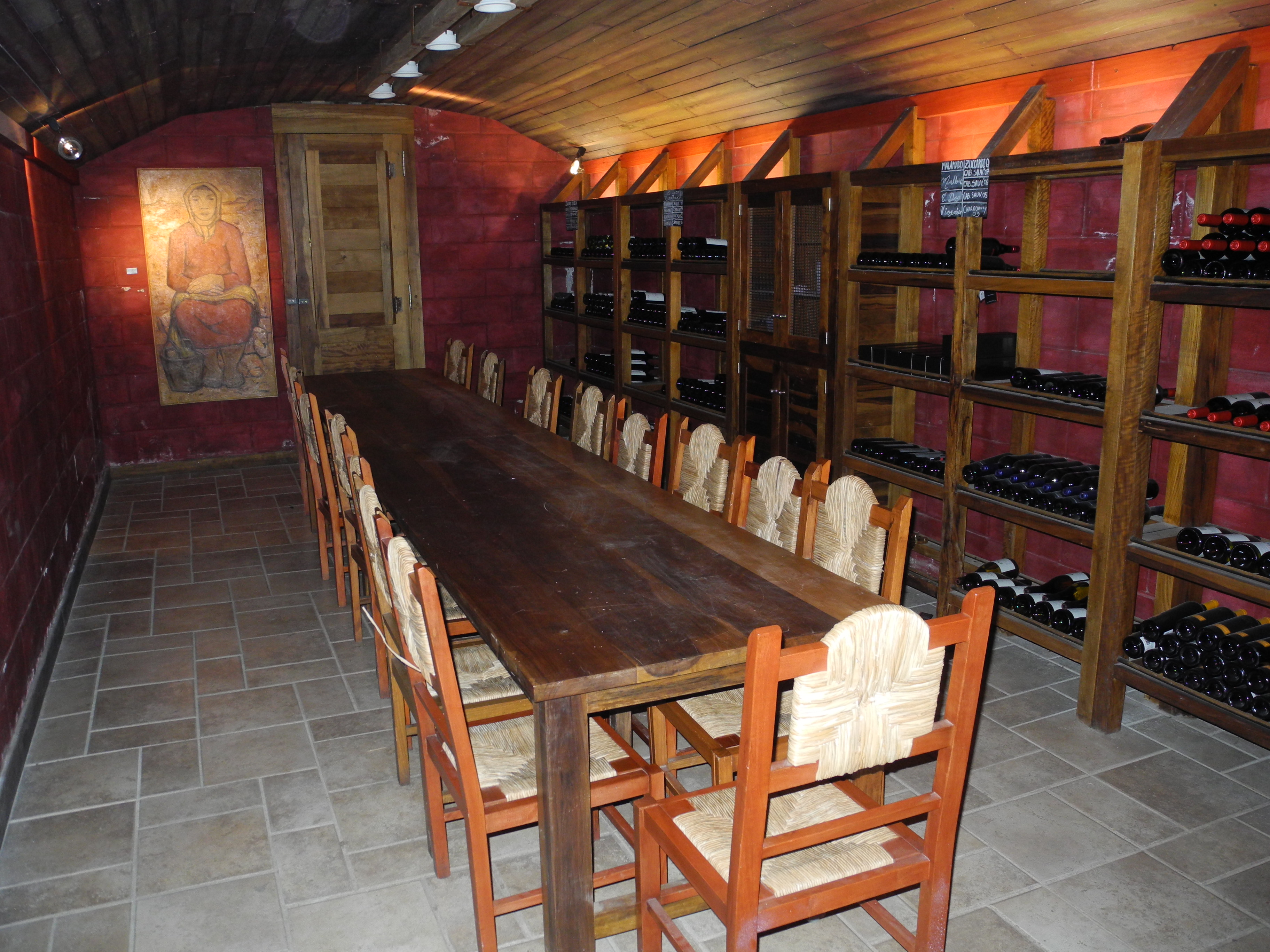
Last, but not least, we got a quick look at the wine cellar below the restaurant. Hundreds of bottles of wine rest here, awaiting anxious drinkers.  Again, these rooms were stunning, with old world wooden beams and stone floors,  beautiful art and many stories lingering in the air

It was a beautiful afternoon which piqued my interest and highlighted the beauty, the mystery and the skill that goes into making good wine.  I am looking forward to many more explorations this year!!

Gorgeous ending to a great day

Read Full Post »

When I was getting ready to leave for Argentina, and telling people where I was headed for a year, the most common response was “I hope you like meat” or some variation.

Yum

Yes, it’s true, meat is incredibly popular here.  Here’s the brief history:

Cattle were first introduced into Argentina in 1536 by Spanish Conquistadors. As the supply multiplied,  so did railway construction and the invention of refrigerated trains and ships in the late 19th century creating a thriving export market.  The reversed seasons between the Northern and Southern Hemispheres  further increased the potential export market in the US and European markets.

There are opportunities for grilled meat and meat filled empanadas on virtually every corner.

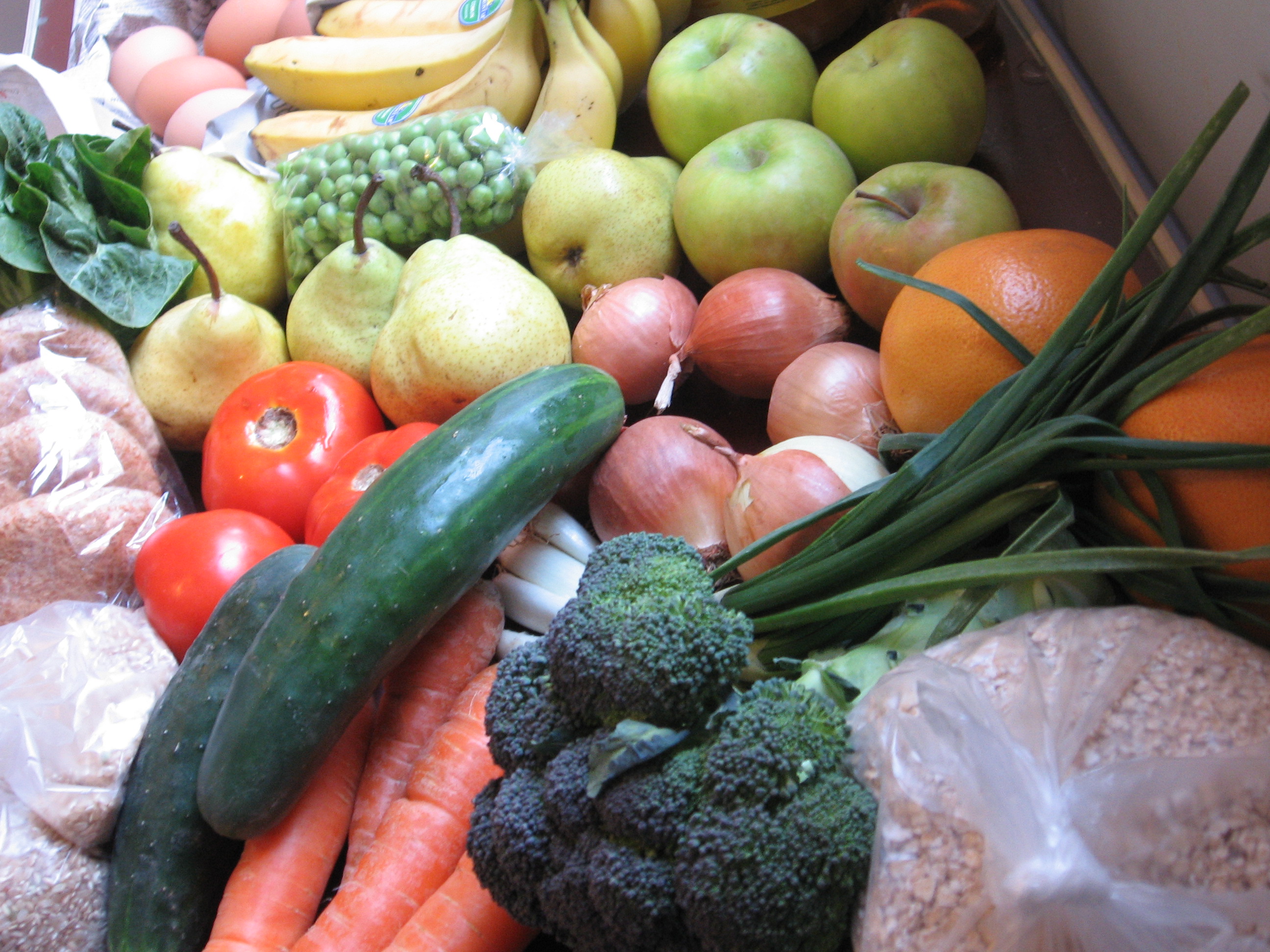
However, what noone seems to talk about are the Fruits and Vegetables!  There are “Verdulerias” and Fruterias” (little sheds selling fresh fruits, vegetables, and often eggs and honey or olive oil) within 5 minutes of wherever you are.  All of this produce is coming from within Argentina.  While I am not buying it directly from the farmers, I am supporting a small, family business who is making a small living off of reselling the produce.  And, the variety is abundant!

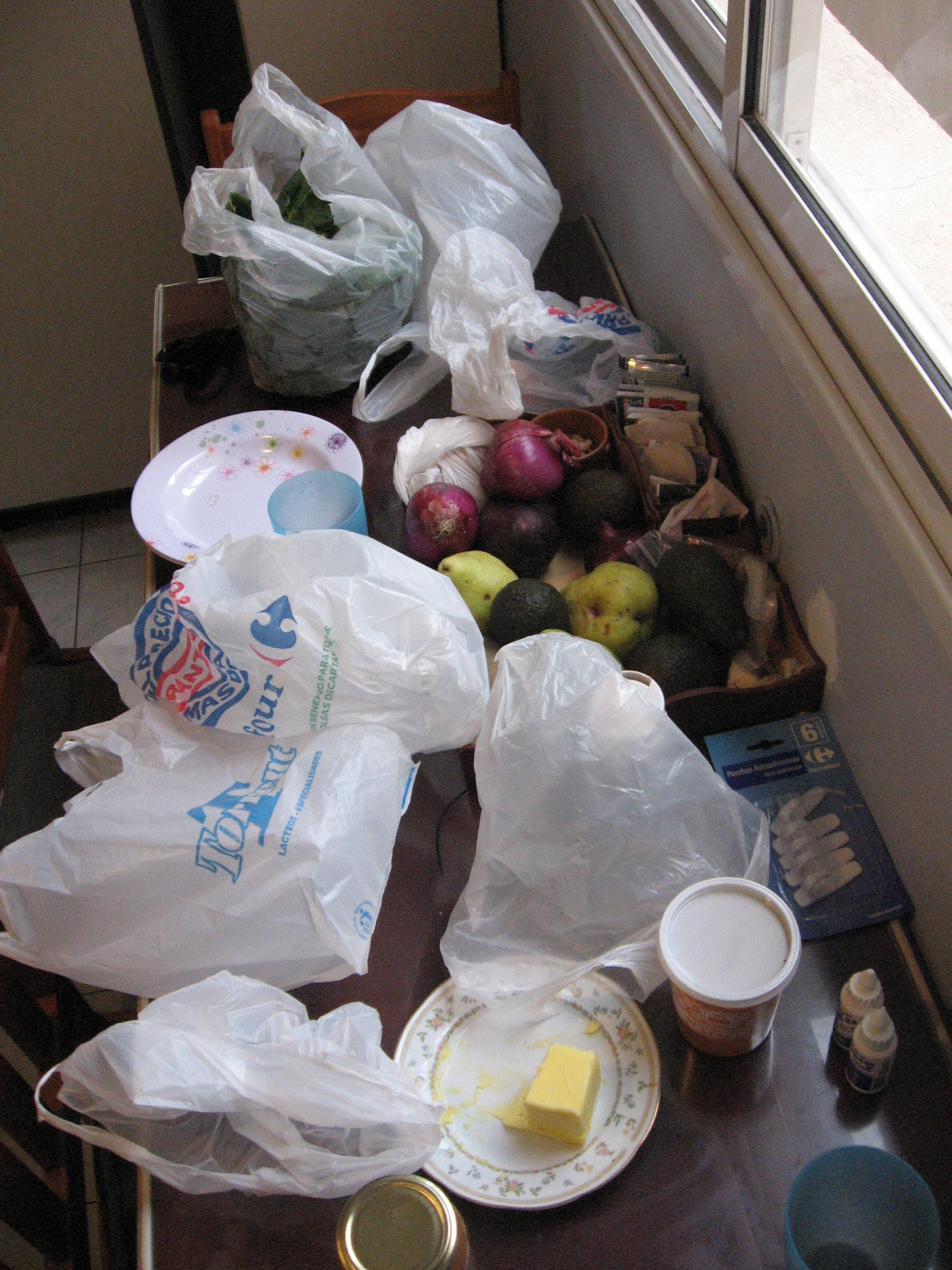
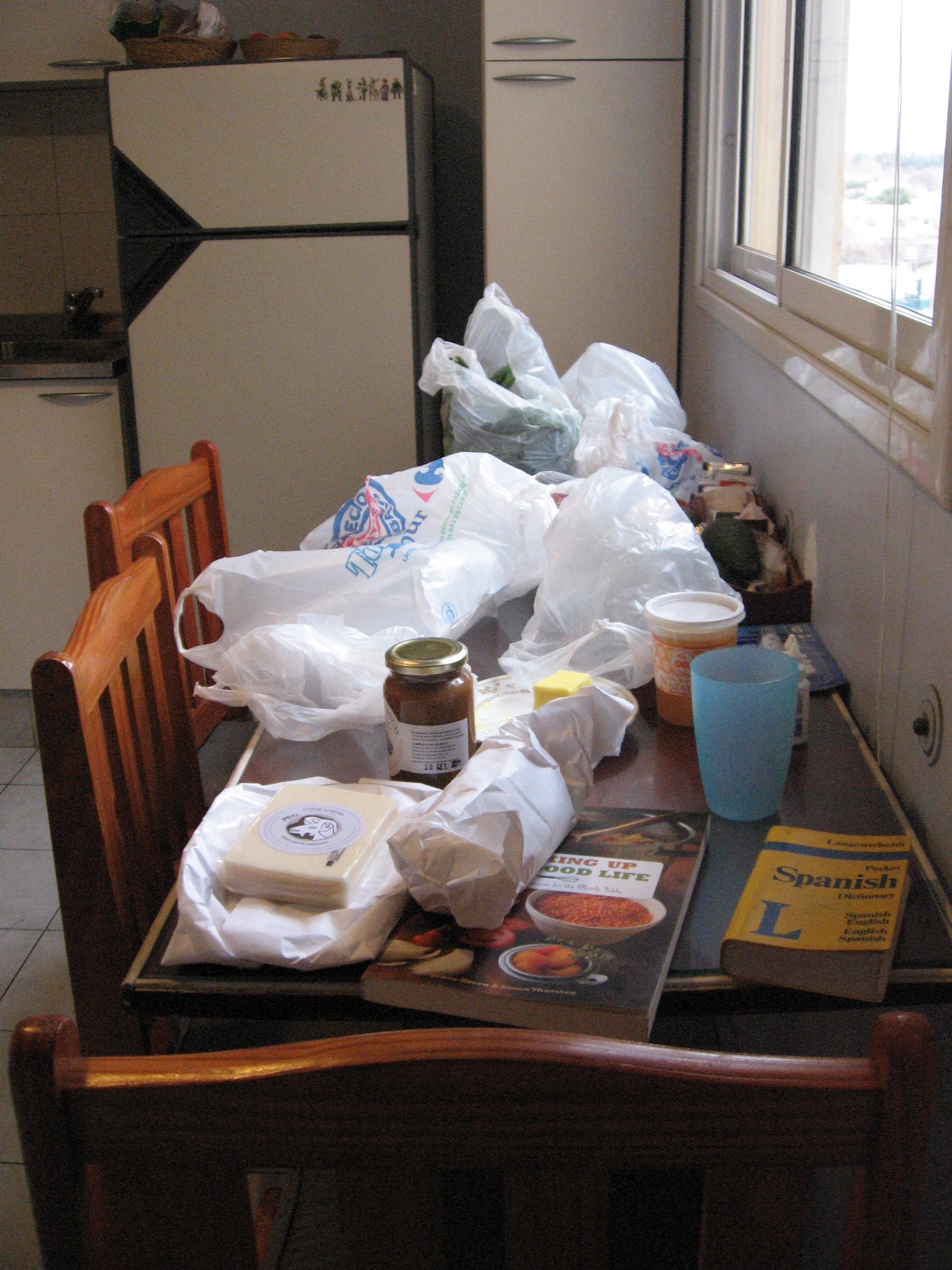
1 day's worth of shopping

Notice the bags of freshly baked whole wheat “pan arabe” (Arab style bread), and brown rice, oats and eggs.  All of this was purchased for about $35 US dollars.  While many things in Argentina are very expensive-like apartments and furniture, the fresh produce, and whole grains are very  affordable, and quite beautiful too!

As a good Midwestern Locavore, I have always felt a little sheepish about buying pears when they have travelled all the way from Argentina.  It is a treat to finally have the opportunity to buy delicious Argentinian pears (and lots of other yummy things) much closer to home!

Read Full Post »

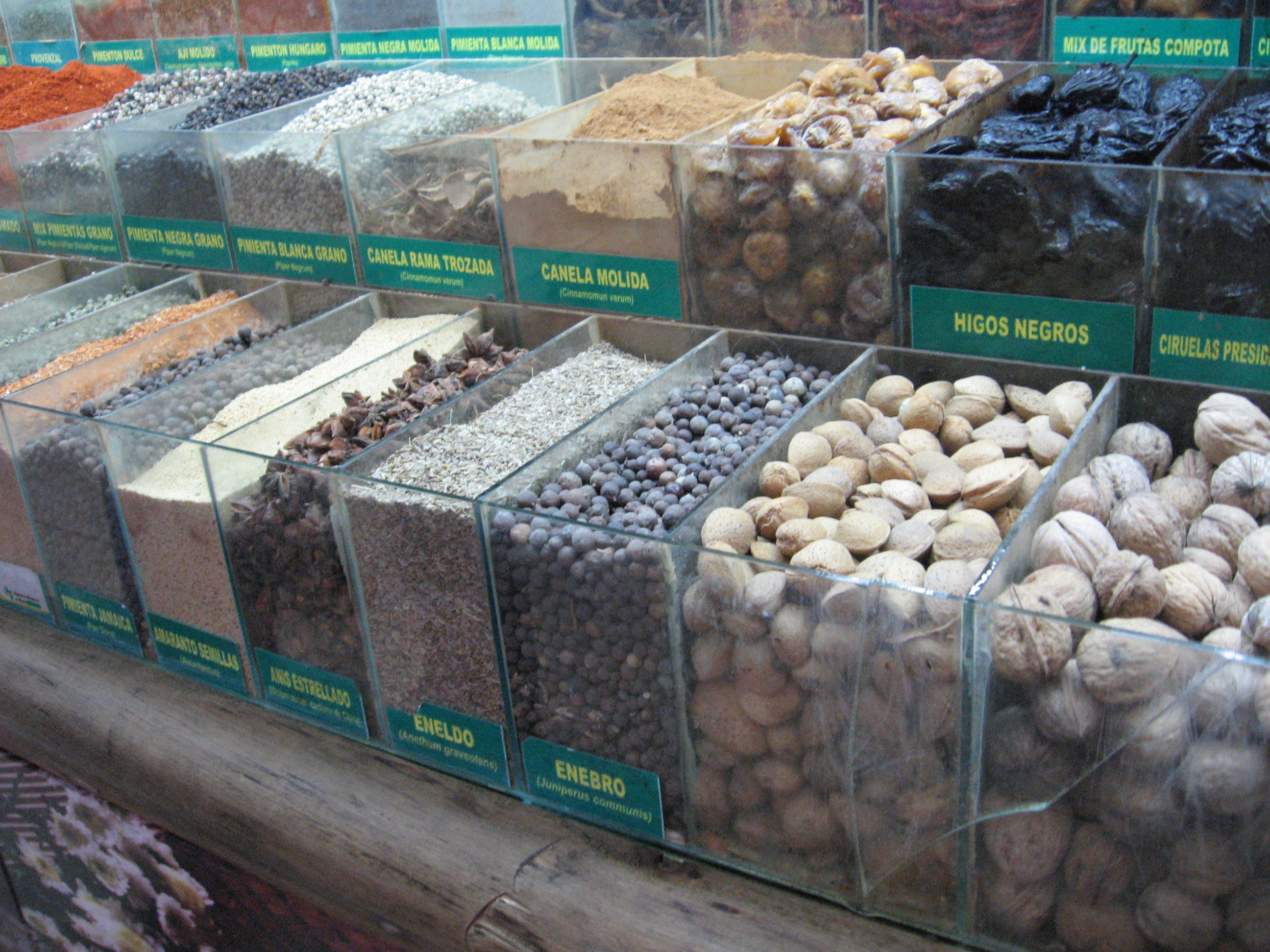
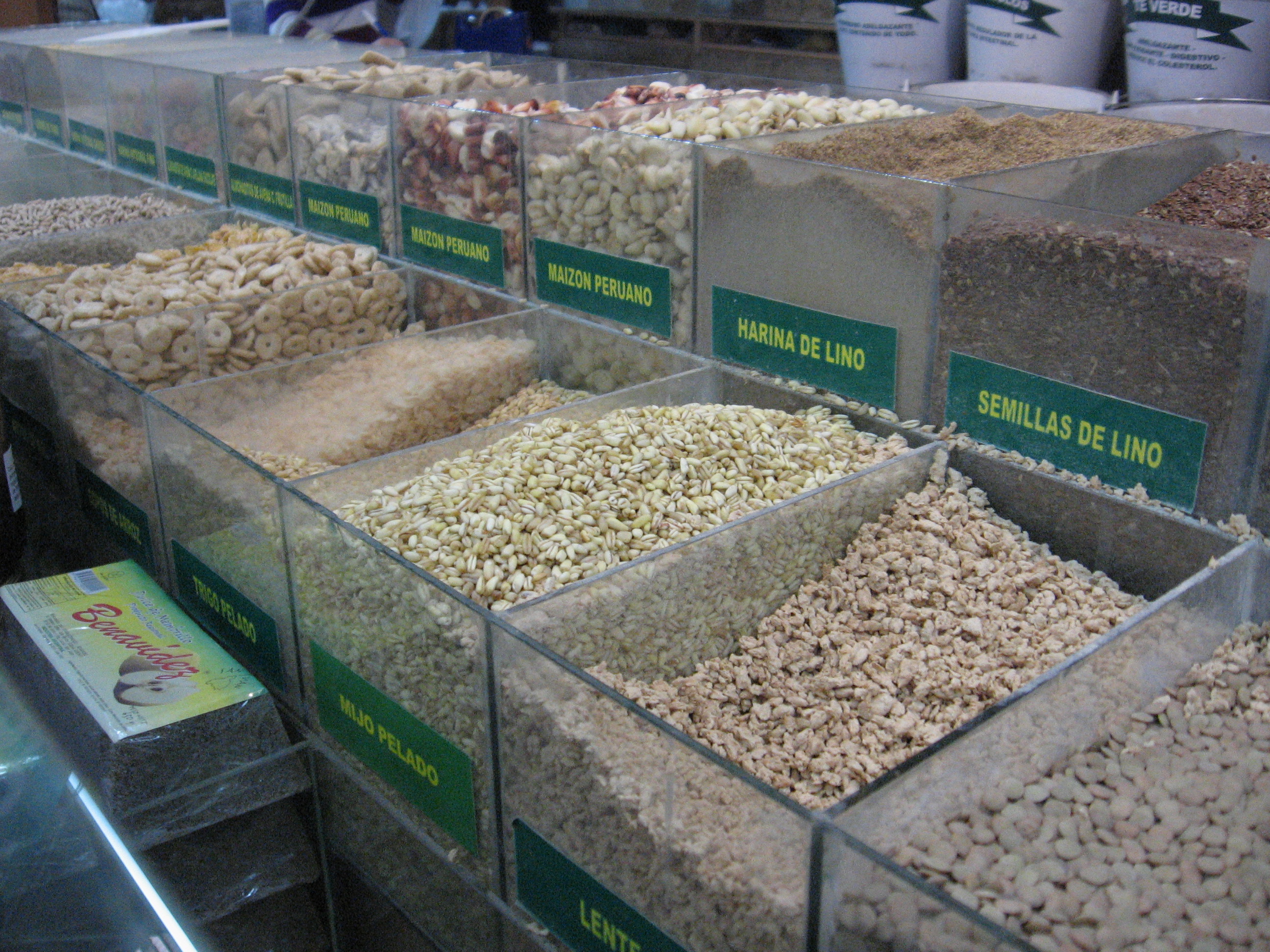
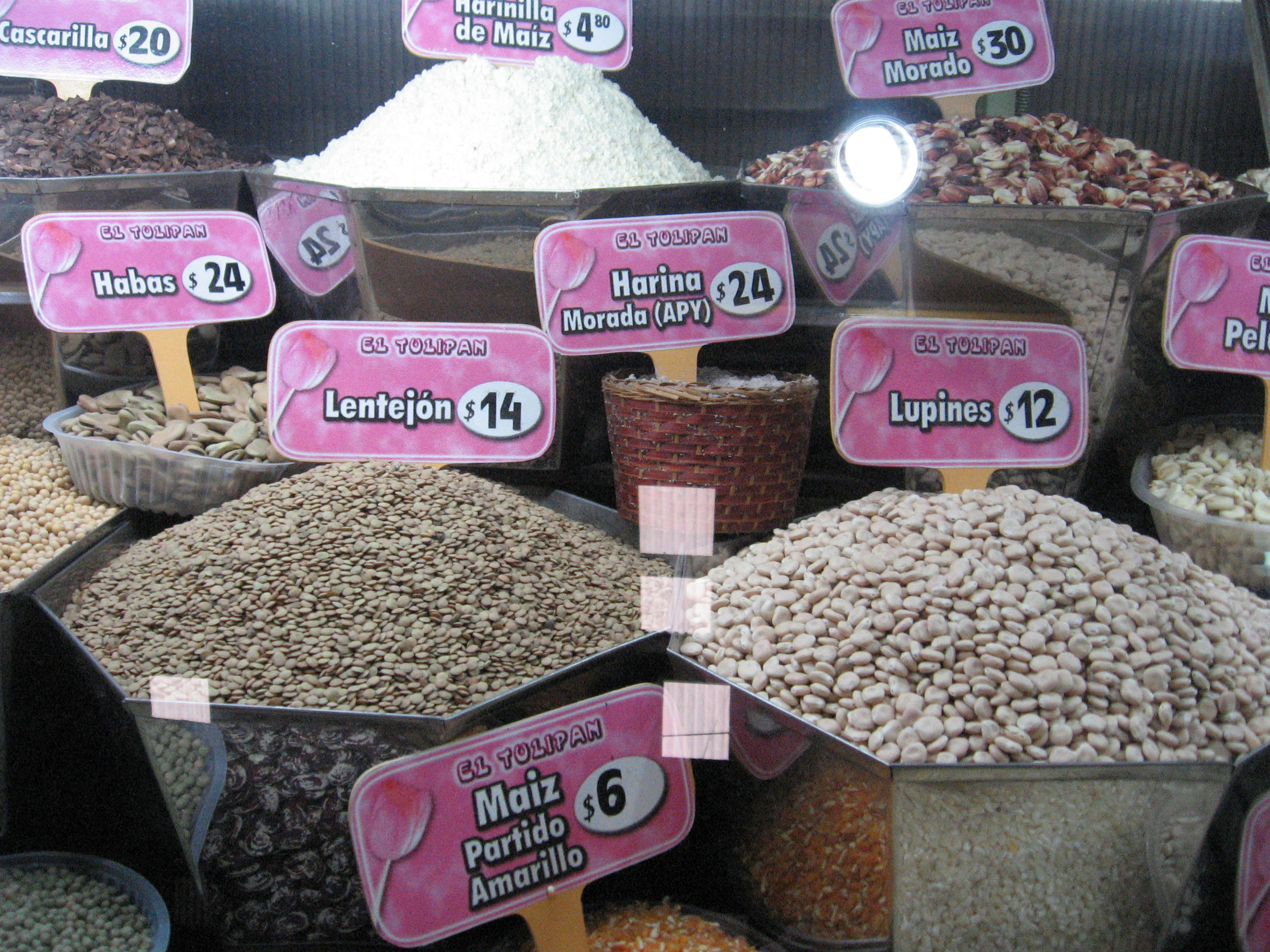
I have mentioned the Mercado Central several times.  It is an indoor market with stalls, much likeThe Midtown Global Market, (where my catering kitchen is).  which is modeled after some of the more famous indoor markets in the U.S.  It is a brilliant concept, and greatly appreciated by folks like me who like to find their food close to the source, and ideally in bulk.  This market is not huge, but I have been able to find most everything that I want and need.  My favorite place is the spice/grain/flour stall.  The men all stand in the middle, surrounded by bins and the customers stand outside and tell them how much of something they want.  It moves quickly, and I am still working out how much half a kilo is, not to mention saying it all in Spanish….so I rarely feel as if I have gotten everything I wanted, but each time I come back I make a new discovery and learn a new word or two.

most every spice you'd ever need

Notice the "Lino" (flax seed)?


I am dying to know what Mendocinos do with ground flax seed, or quinoa.  I haven’t seen evidence of any of these things anywhere, so I am quite curious. There are also lots of dried beans, and while you won’t find corn tortillas anywhere, there is plenty of whole dried corn, corn flour and polenta. Again, I am curious to know what everyone is doing with all of these whole foods!


I have learned that the places to find “health food” and things like herbal supplements, whole grain pastas and crackers and natural sweets are called “dieteticas”.  They are scattered throughout the city and all seem to have more or less the same things, except the one I discovered very close to our apartment. They have FRESHLY BAKED whole wheat bread, pizza crusts, sweetbreads, media lunas (the crescent shaped pastry sold everywhere) and alfajores.  They have a kitchen in the back where they prepare everything.  I am strategizing about how to arrange a little trade or workshare with them…..

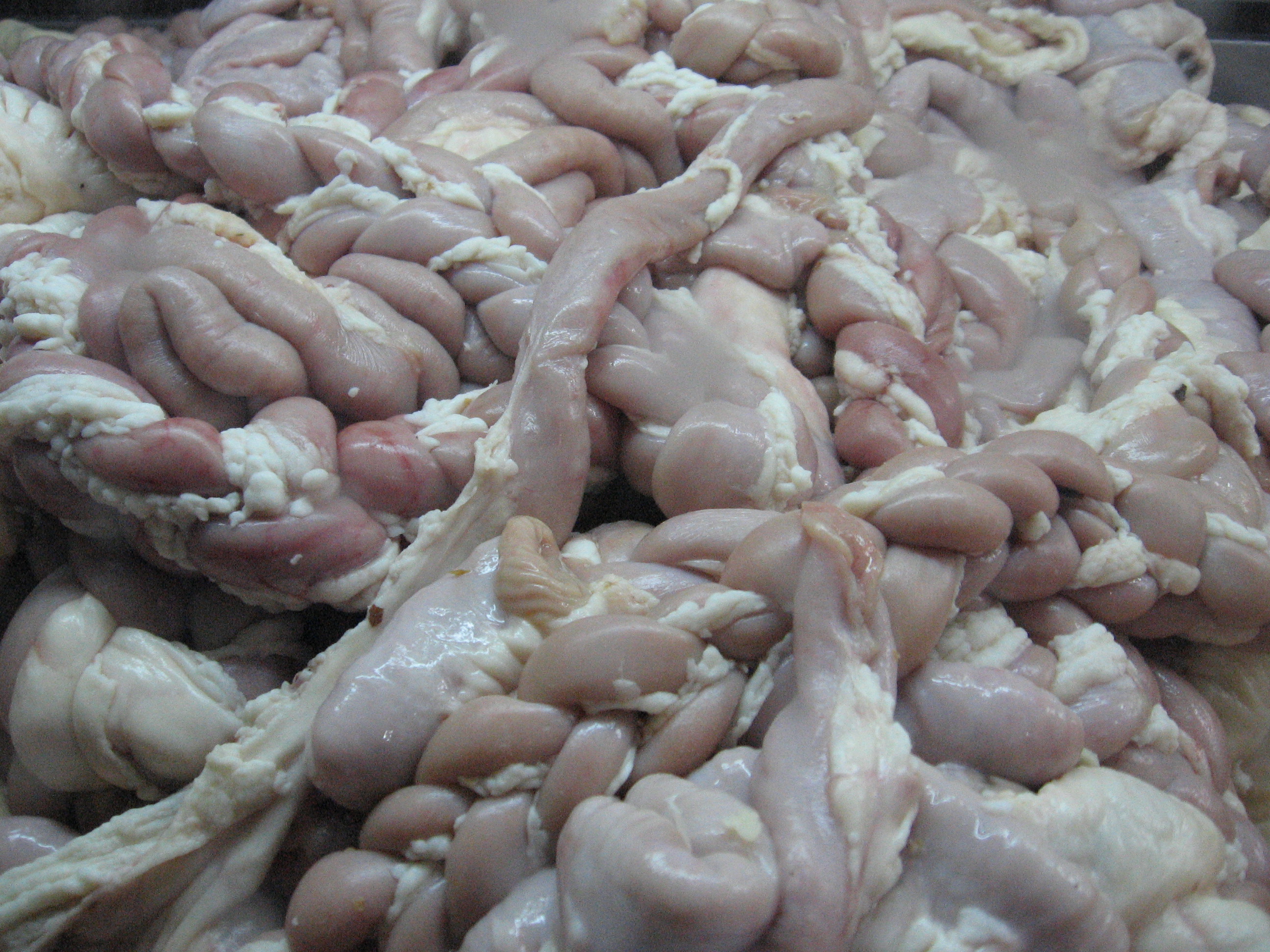
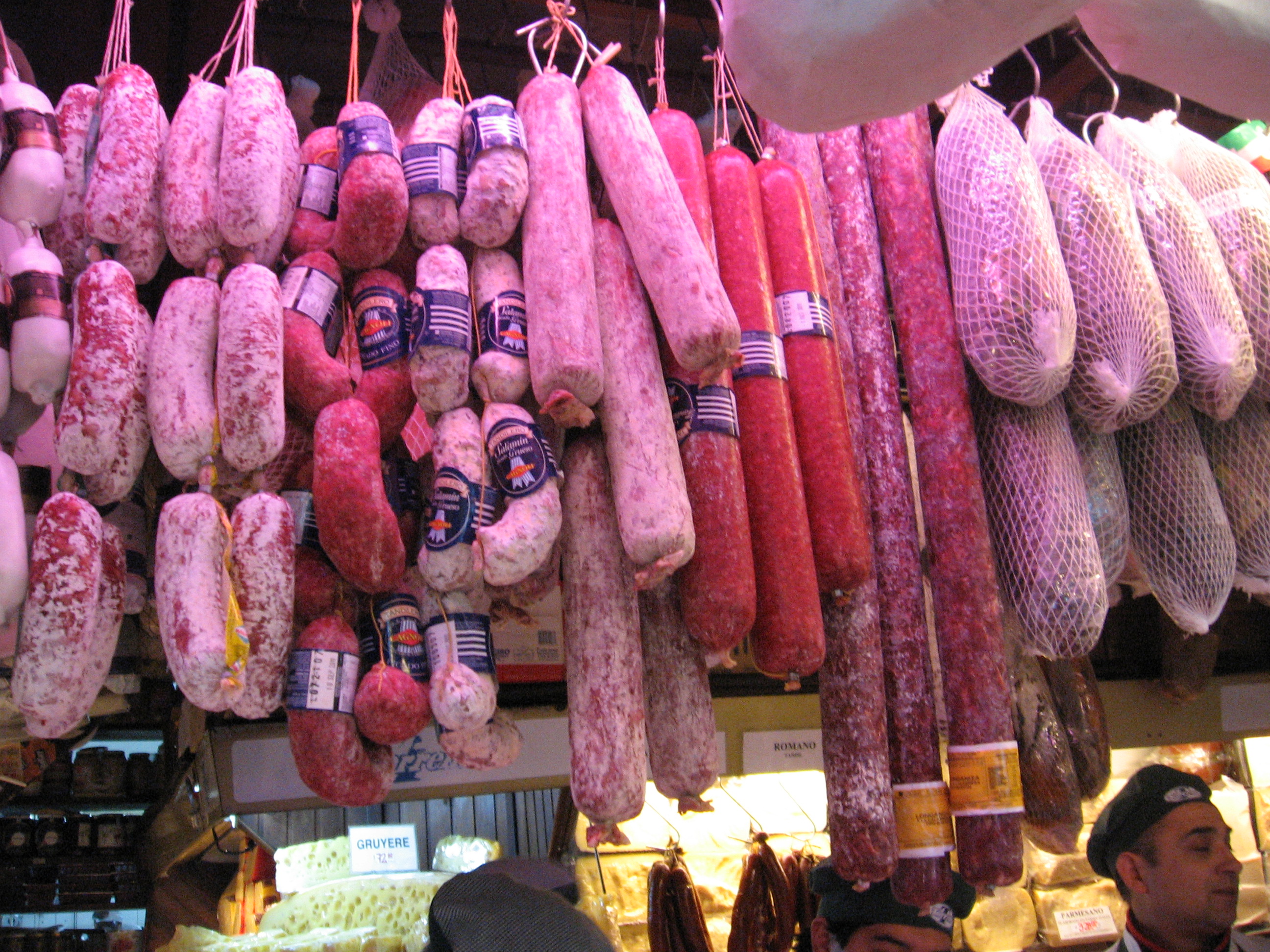
A few last photos from the market.  I was a little self conscious about taking out the camera, and definitely didn’t want to take photos of people, but it’s tough to pass up these classic shots of the meat.

I'm guessing intestines

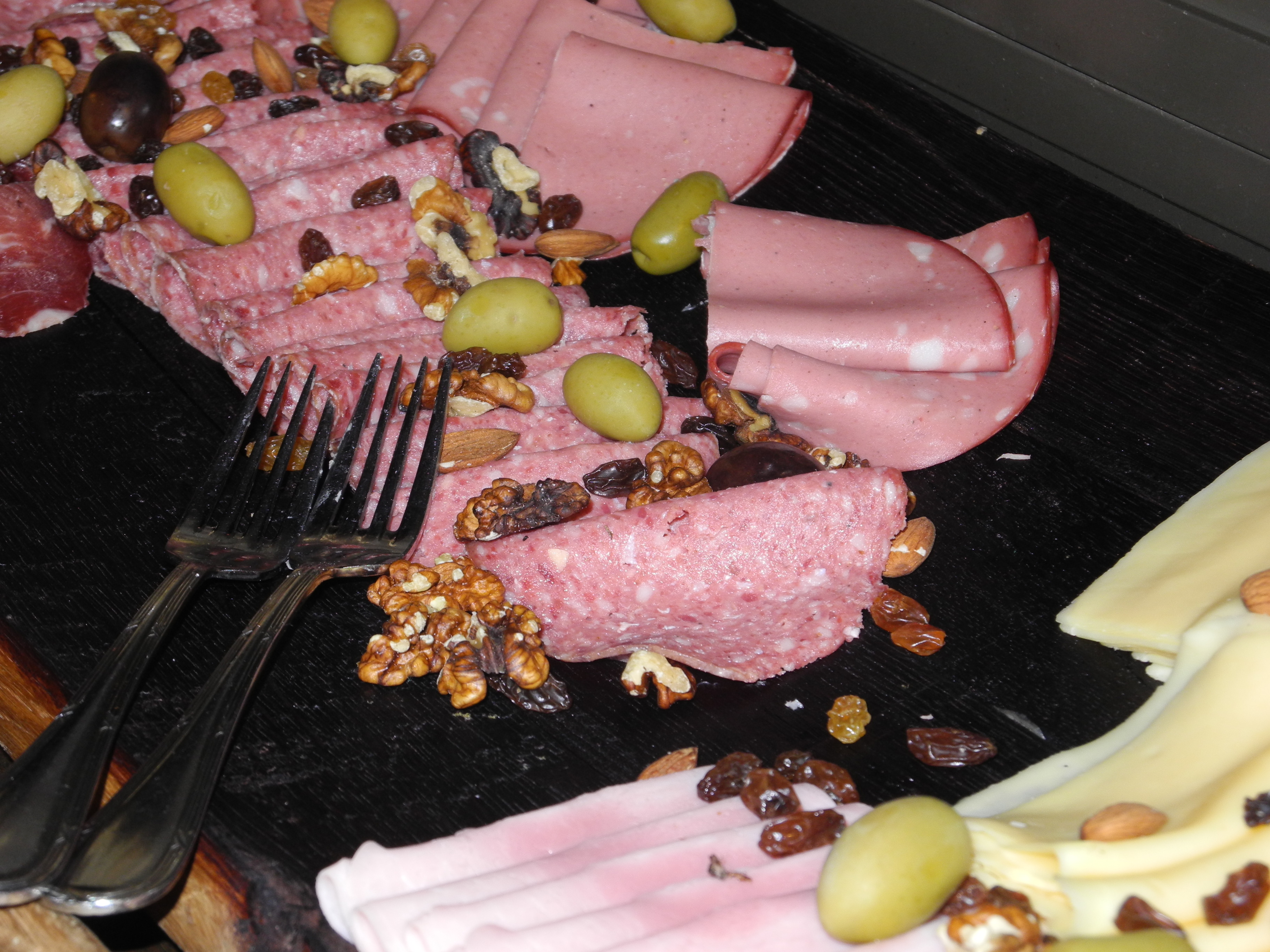
For all you cured meat lovers


Slowly but surely I am finding my way to the places that will nourish and sustain us.  I still have much to discover about the food system here-who and where does it all come from, and what happens to all the waste? Is there a culture of sustainability?  If so, where and how do they fit into the larger culture here?

We did just discover that the local library is sponsoring a “Mes de la agricultura familiar”- a month about local agriculture, and there is a farmer’s market tomorrow.  I will definitely check it out, and ask as many questions as I am able to.  Thankfully I’ll have my translator (AKA husband) with me.

Read Full Post »

It has been cold here.  Bone chilling cold.  Not the below zero kind of cold that we are used to in Minnesota, but a kind of cold that gets inside you quickly, and is hard to get out.  And, while the pizza, pasta and meat have not been warming my heart, the other specialty in this town is chocolate.  As I mentioned, there is a strong Italian presence here, so lovely, delicate pastries abound.  And there are the Alfajores

Traditional Afajores

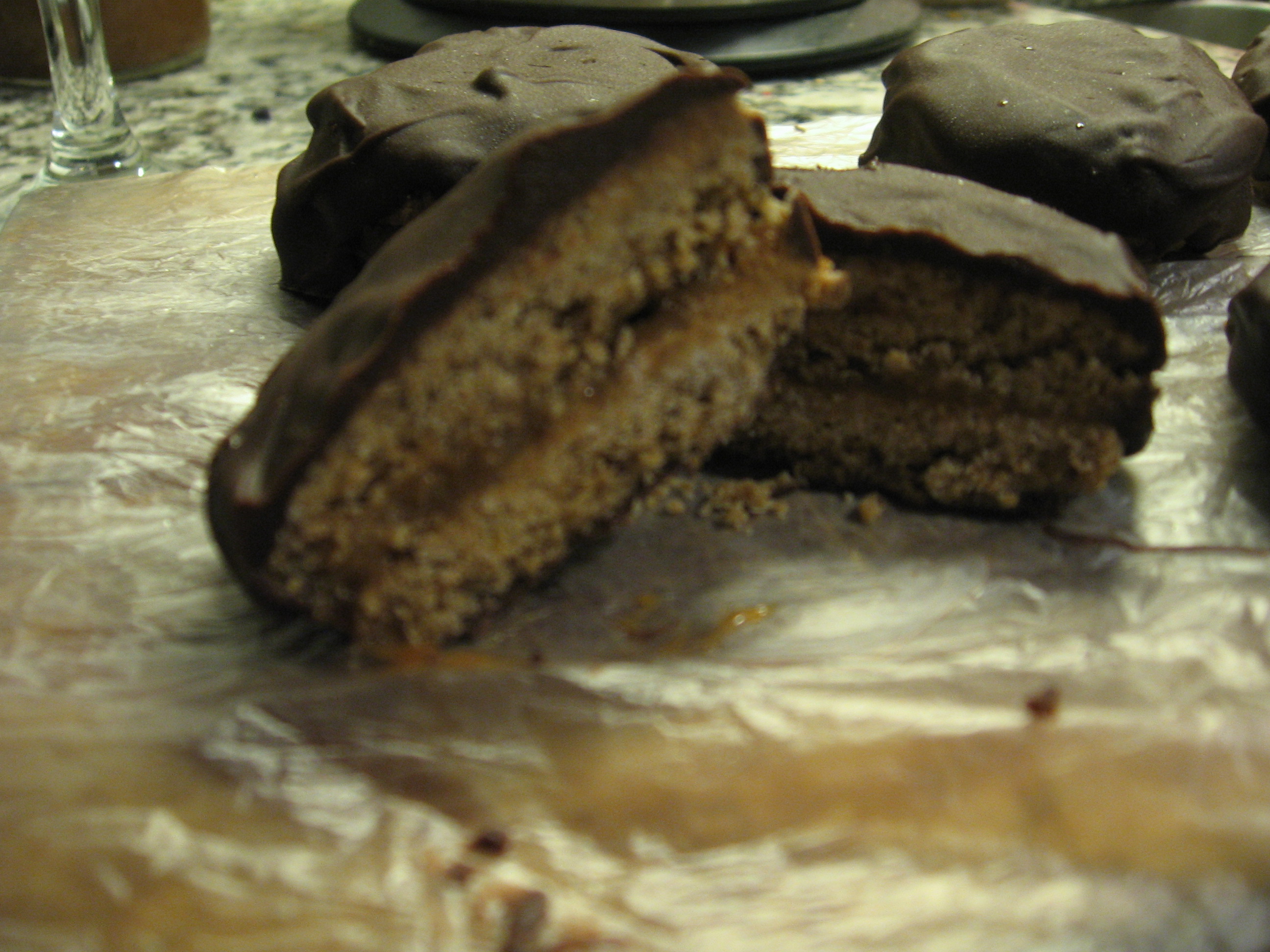
These cookies apparently have their origins in Arab lands, and are traditionally made with honey, almonds and cinnamon…today they are found mostly in Argentina and surrounding countries, and have evolved to the heavenly combination of dulce de leche sandwiched between two butter cookies and smothered with chocolate glaze.  For those of you unfamiliar, dulce de leche, a common treat in Latin America, is essentially a caramel made from milk and sugar. Needless to say, a gal could spend a lot of money, and potentially gain some pounds sampling every version of Alfajores out there!  Not to mention that there likely isn’t a ‘whole foods’ version of the treat to be found in this town!

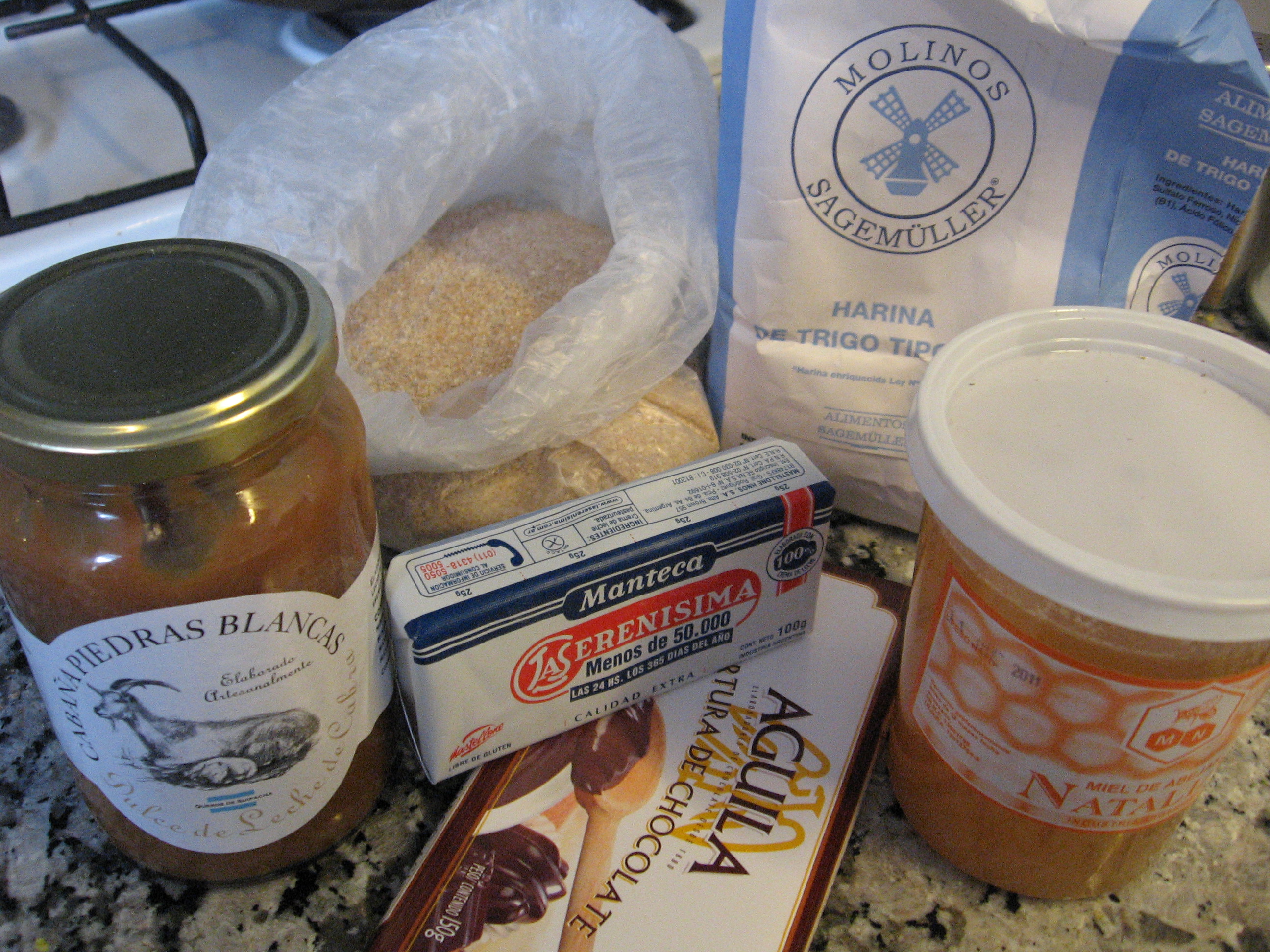
Since there are many low quality versions,  I have held off on buying dulce de leche, and thought I’d wait to make some of my own.  Then, at the Mercado Central in my favorite cured meat and cheese shop, I spotted a jar of ‘dulce de leche de cabra’-that would be an artisan version of the sweet stuff, made with goat’s milk!  I took it home, and yesterday instead of venturing out into the cold, I stayed in and spent the afternoon creating my own version of Alfajores.

As many of you know, I like to bake with healthy, whole ingredients.  So, I thought I’d go with a simple shortbread cookie made with honey, brown sugar and a mix of white and whole wheat flour, and bittersweet chocolate with real butter.

I adapted my favorite shortbread recipe.  It is incredibly simple and delicious and includes just three ingredients:

1# butter, 1 cup sugar, 5 cups flour

I have already converted this recipe by substituting maple syrup-my favorite sweetener of all time, but there is no maple to be found in South America.  I decided to use half honey and half brown sugar, and to make a small batch.  I was also converting cups to grams without any formal measuring utensils (something I haven’t added to the kitchen yet).  So here is what I used:

80 grams softened butter (about 3 oz.),

2 Tbs honey, 2 Tbs brown sugar,

125 milliliters white flour,

125 milliliters whole wheat flour (about 2/3 cup each)

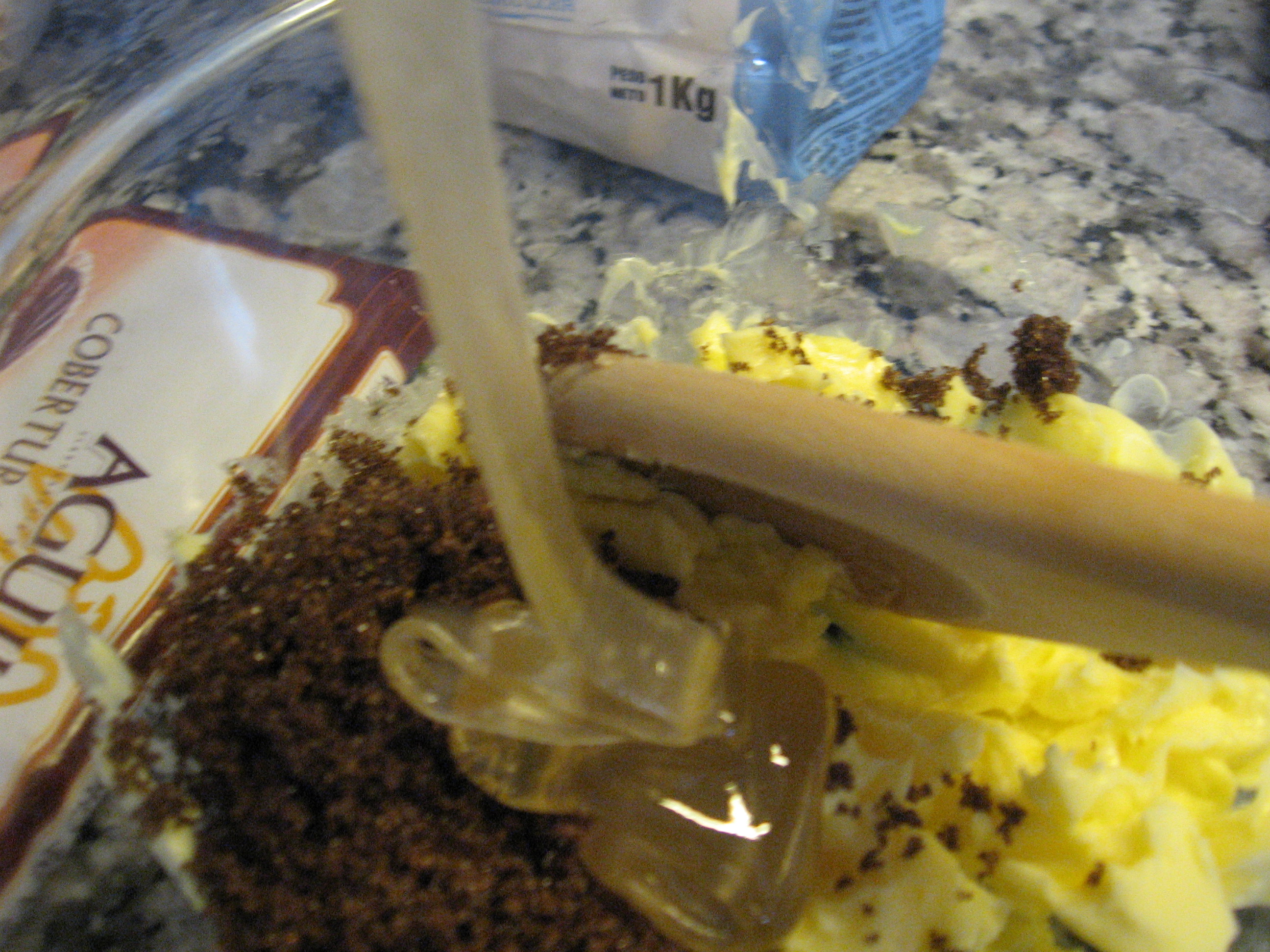
creaming the butter, sugar and honey

Once this is creamed, you add the flour and mix until it forms a good firm, yet pliable dough

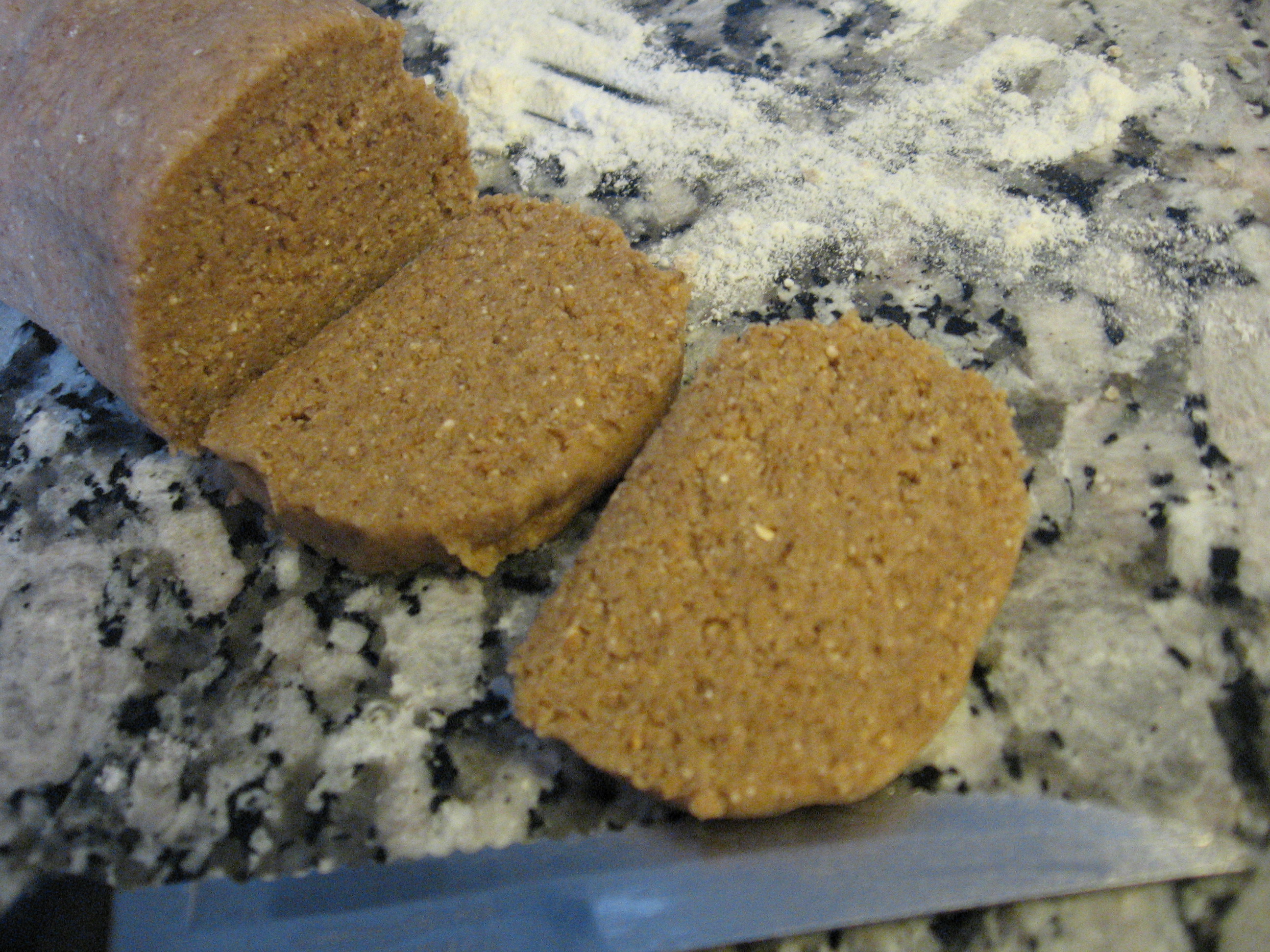
When the dough is firm, you roll it into a smooth ‘log’ being gentle enough not to flatten it, yet firm enough to keep out any air holes.  Then you want to slice the dough into nice uniform cookies.  Normally, for shortbread, I’d cut them about 1/2 inch thick, but since I was making a sandwich with these, I cut them much thinner-about 1/4 inch thick.  A serrated knife works well for this.They were fragile, but firm enough.

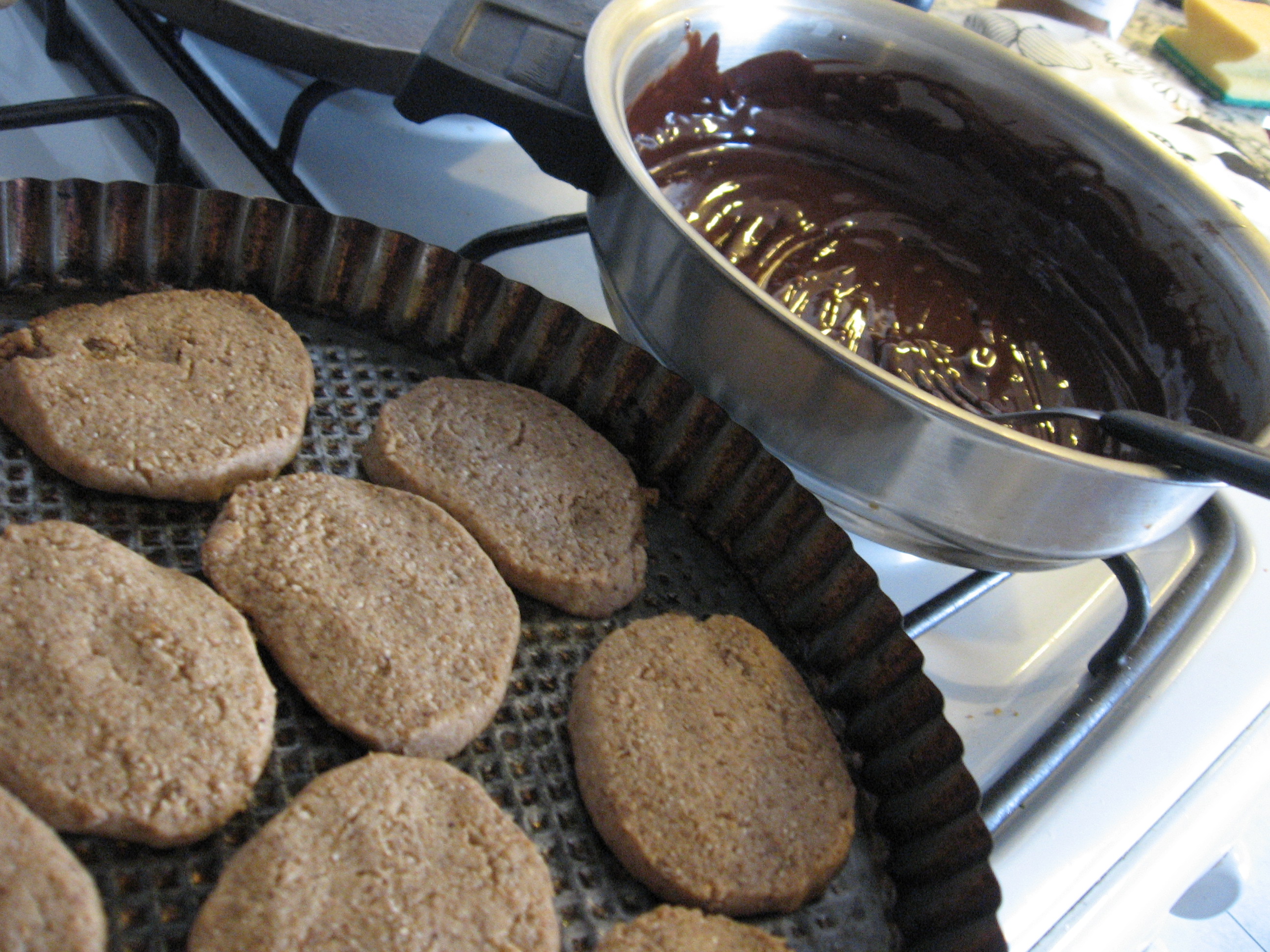
While the cookies baked-about 18 minutes at 375 (my oven has no numbers on it, so I was guessing at the temp), I made the chocolate glaze.  I have found a lovely chocolate company called Aguila. For a pretty reasonable price (about $2 per 6 oz bar) I have a nice quality semi sweet bar that melts creamy and rich.  I melted about 40 grams of butter (about 1 1/2 oz.) with about 4 oz. chocolate.

perfectly browned cookies, freshly melted chocolate

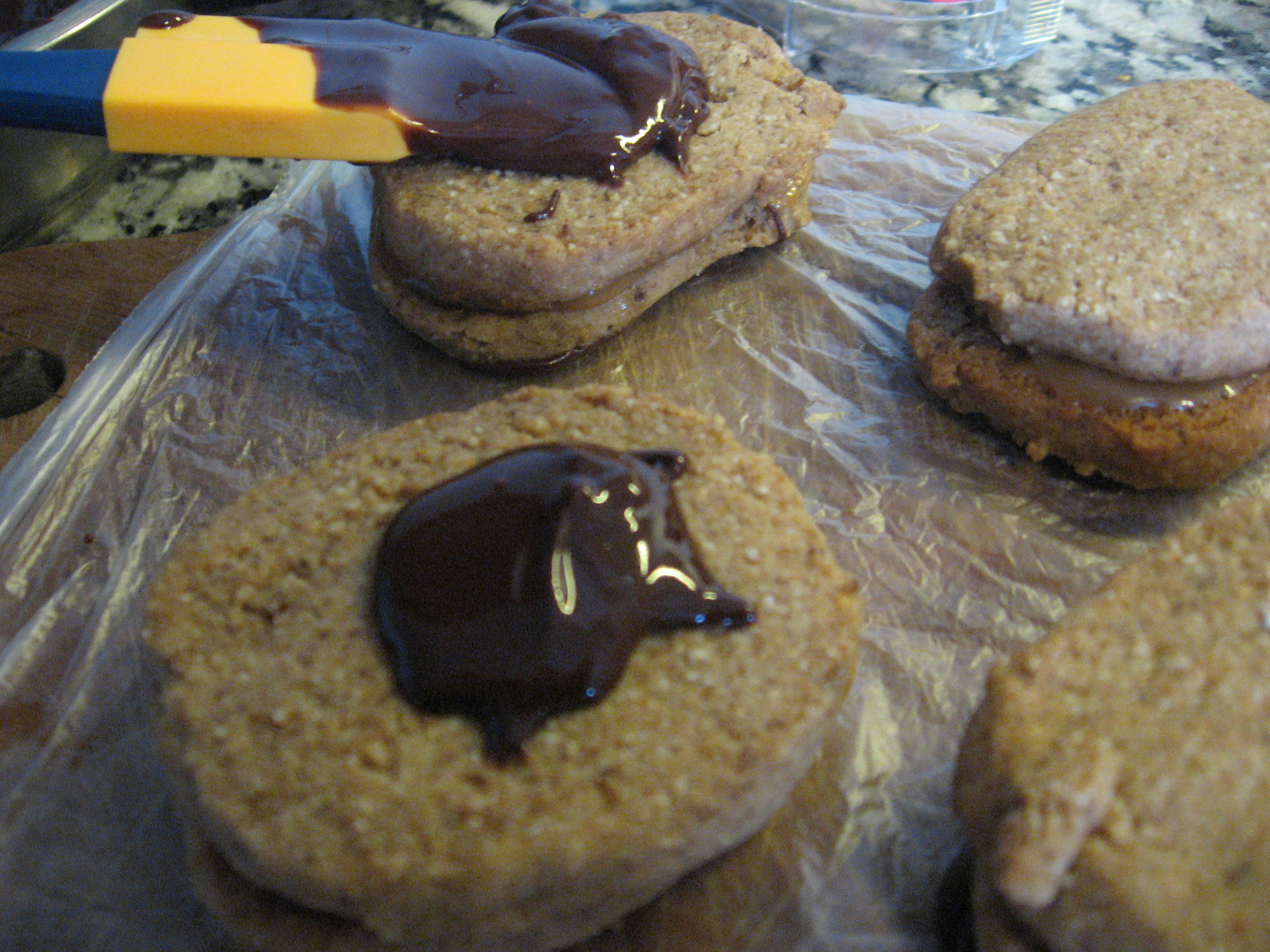
Now I was ready for the assembly.  This was somewhat laborious but fun nonetheless.

bottom halves with dulce de leche

now for the chocolate!

like frosting little cakes

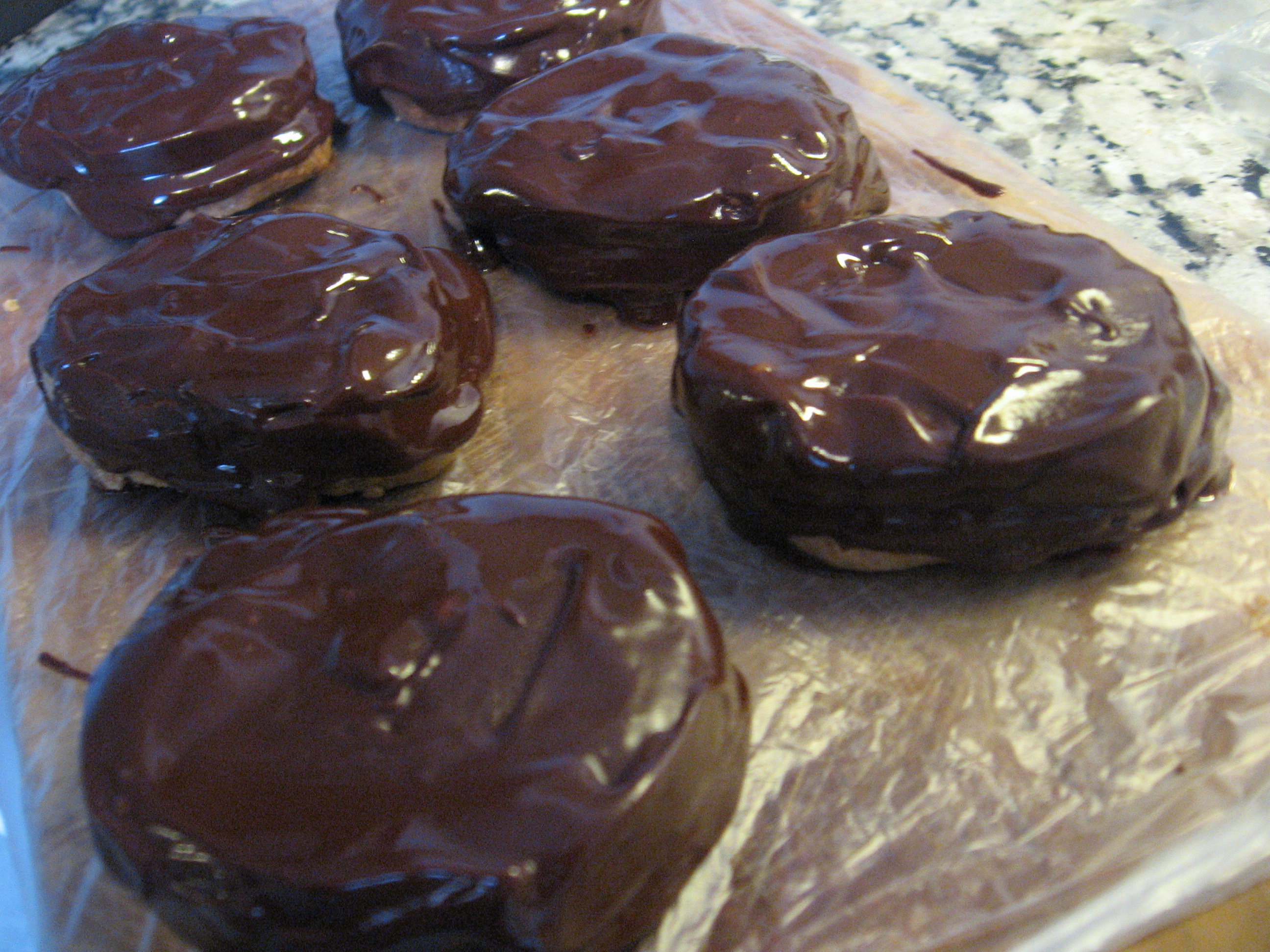
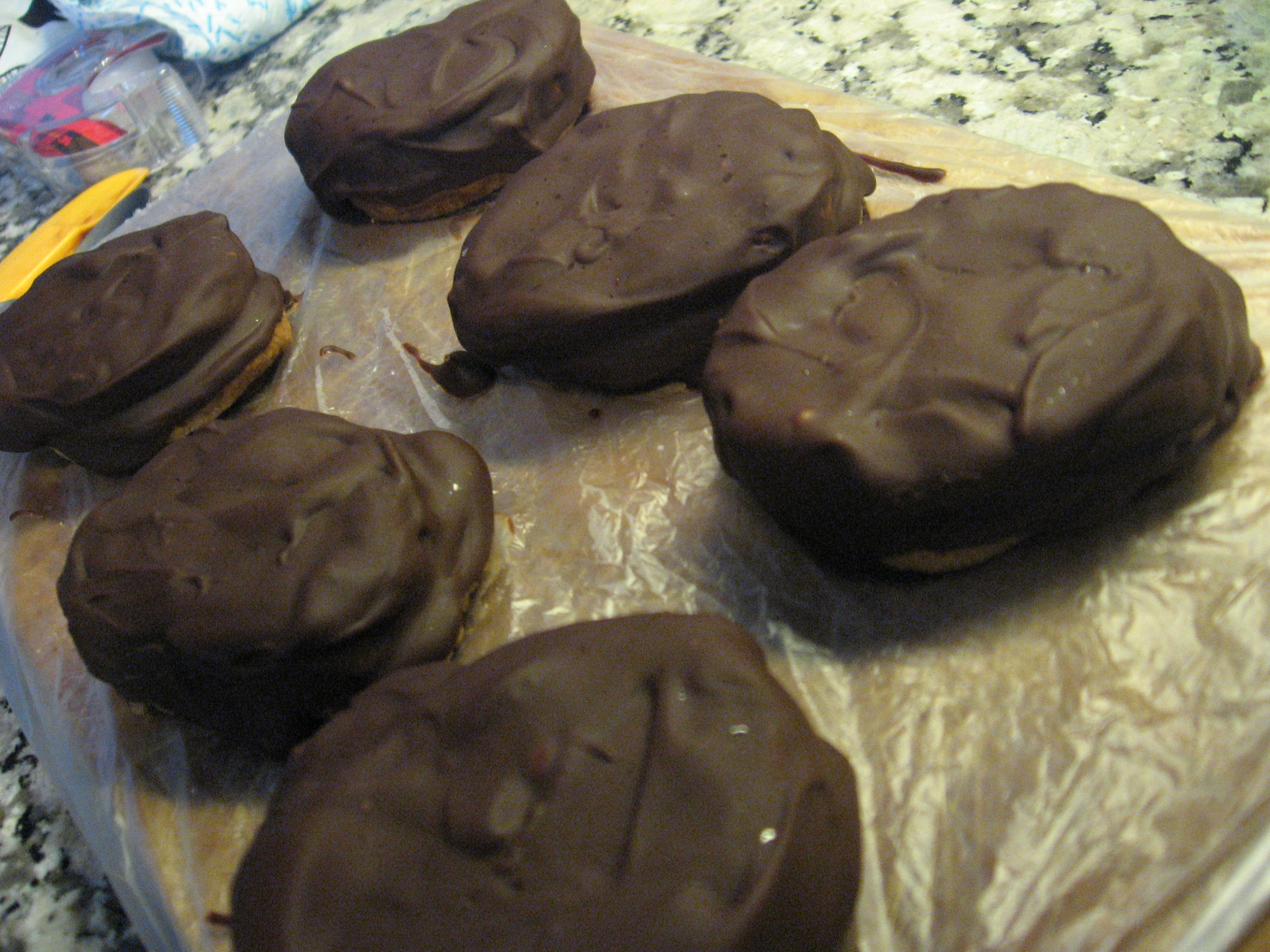
Notice the makeshift tray-I covered a cutting board with plastic and taped it down so it wouldn’t move.  I also remembered to glaze the bottoms of the cookies first. After they were all covered, I stuck them in the freezer to solidify.

Here they are.

Not bad for my first attempt!  A couple of happy chocolate faces too!

Read Full Post »

Plastic Bags

Back home I am all about sustainability.  I am passionate about and committed to all things green. It’s even my favorite color.  I never feel like I am doing EVERYTHING that I can to live a life of minimal impact and ‘best practices’ as they say in Public Health.  We recycle our bottles and papers, we buy many things secondhand, we use chemical free cleaners and bath products, we buy our food in bulk and store it in glass containers or reused bags, we garden organically, mow our lawn with a push mower and own only one car.  And we choose to bike as much as possible. And of course, we buy our (whole) food often from local sources, many of whom I know personally. I have spent the bulk of my adult life, especially since settling into a house and having children, trying to be a good steward of the earth.

Now, here I am in South America, where, like many other places across the world, I think we romanticize as being quaint, and old-fashioned, which may include such things as living simply and off the land and eating regional foods…..NOT!  I am dismayed and confused at the extraordinarily wasteful aspect of this culture.  It is not new to me.  I have done some traveling in Mexico and the Middle East and seen similar behavior, but I simply can’t wrap my head around it.  The wastefulness exists on so many levels it is difficult to begin to describe it.  I will start however, with plastic bags.

bags for eveything.......


They have become the bane of my existence.  It is as if they are a sign of wealth. When I go to the store, no matter which store it is, they send me home with about one bag per item, and these are small bags.  I have learned to suggest that they fill them more full; I’ve even had the gall to take things out and repack my own bags. On a typical trip to the ‘target’ style store, I might come home with 8 bags-each containing an average of two items.  We have been here for less than two weeks, and our broom closet is bursting with bags.  I guess this could be seen as a good thing, since we also throw EVERYTHING in the garbage.  I have yet to learn about any alternative disposal for vegetable/food waste.  We asked around a bit, and no-one seems to have an idea of what we are talking about. As for the recycling, fortunately there is an informal system of cardboard collectors-they just take it upon themselves to collect what is left on the street, and bring it to the recycling center.  According to one fellow, it is a good living.  This is, of course, if people don’t just throw their cardboard into the garbage along with everything else.

The saddest part of this to me, is where the plastic seems to end up.  Jon and I took a bike ride out of the city yesterday, up the mountain road leading out of Mendoza.  It was our first exposure to the shanty towns.  The makeshift communities where many of Mendoza’s poor families and laborers live.  While there was no shortage of satellite dishes attached to the flimsy roofs, the extraordinary landscape of plastic bags and bottles strewn across every hillside was disheartening and just plain awful to look at.  It was a reflection of course, of many larger socioeconomic and cultural problems, but painful nonetheless.

I know there is a bigger discussion here, about global issues of supply and demand, and about consumption and access and survival and about consumer culture and what it means throughout the world…..in the mean time though, I am thinking about bringing my own bags to the store.  As they say, “be the change you want to see in the world.”

Read Full Post »

Pizza? Pasta?

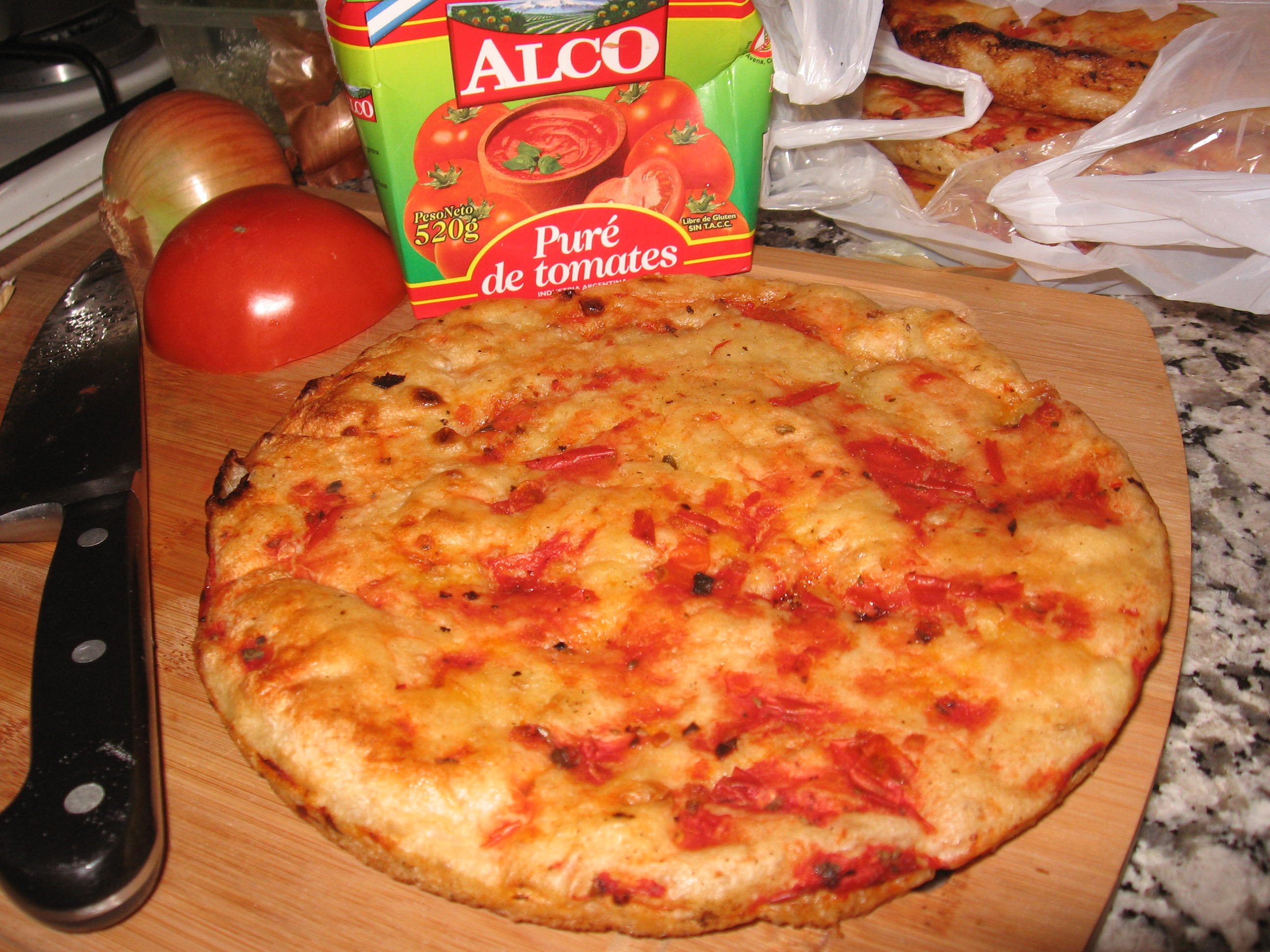
Many people are surprised to know that the staple food here in Argentina is NOT rice, beans and tortillas. In fact, I have yet to find anyone or any place to buy tortillas of any kind, and although we have passed a few Mexican restaurants-for some reason it seems strange to go out for Mexican food…  Meanwhile, between the mid 1800’s and the early 1900’s over 2 million Italians immigrated to Argentina making Italian the second most common language spoken here. As you can imagine, Mendoza is bursting with Italian culture, not the least of which is it’s food!  Although Argentina has a reputation for being all about meat-and it certainly is abundant here, there is definitely no shortage of pasta and pizza.  We have only begun to explore the abundant varieties and opportunities for these items, but I have already found lots of fresh pasta, and sampled some of the local pizza crusts at home.

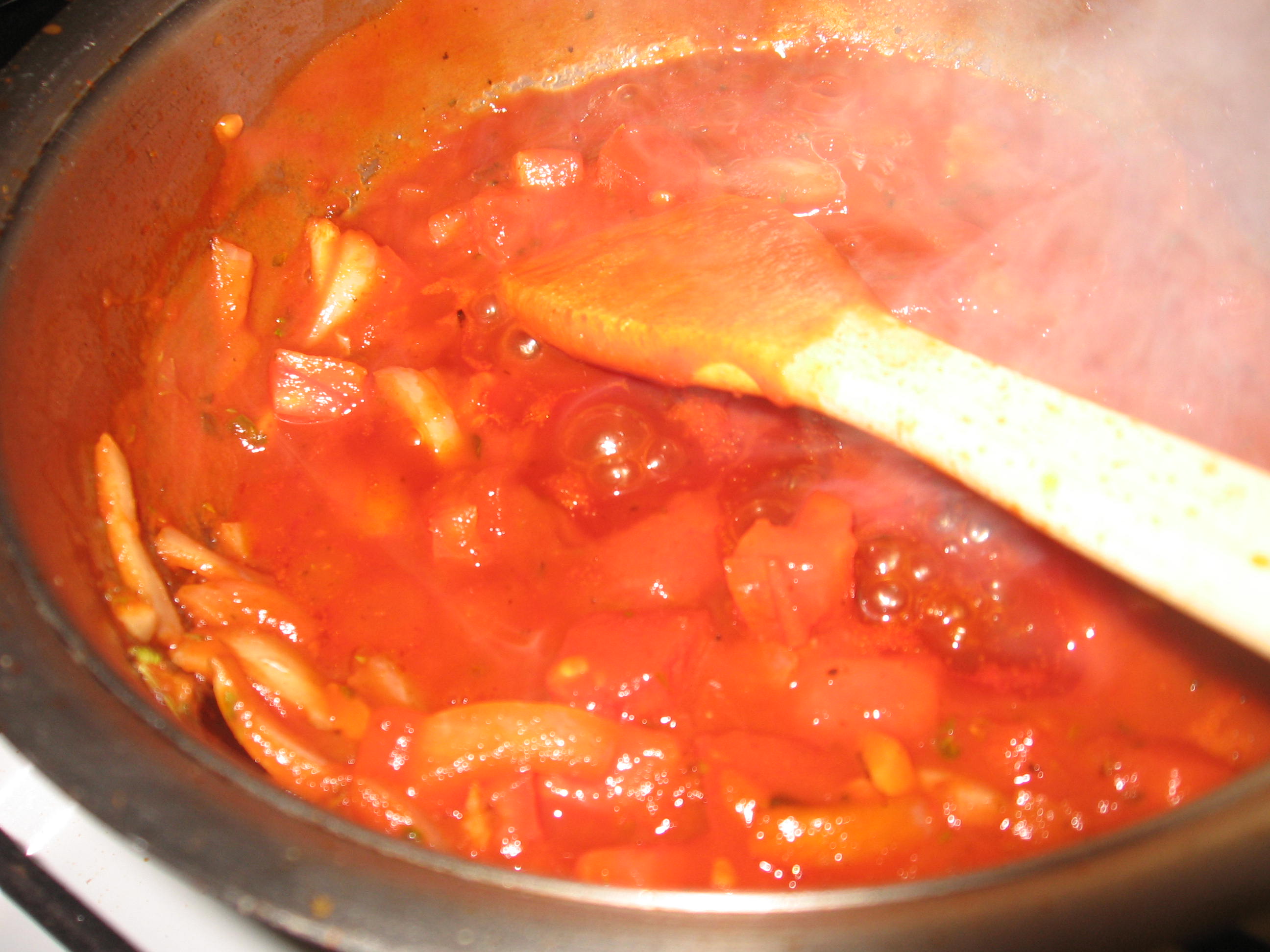
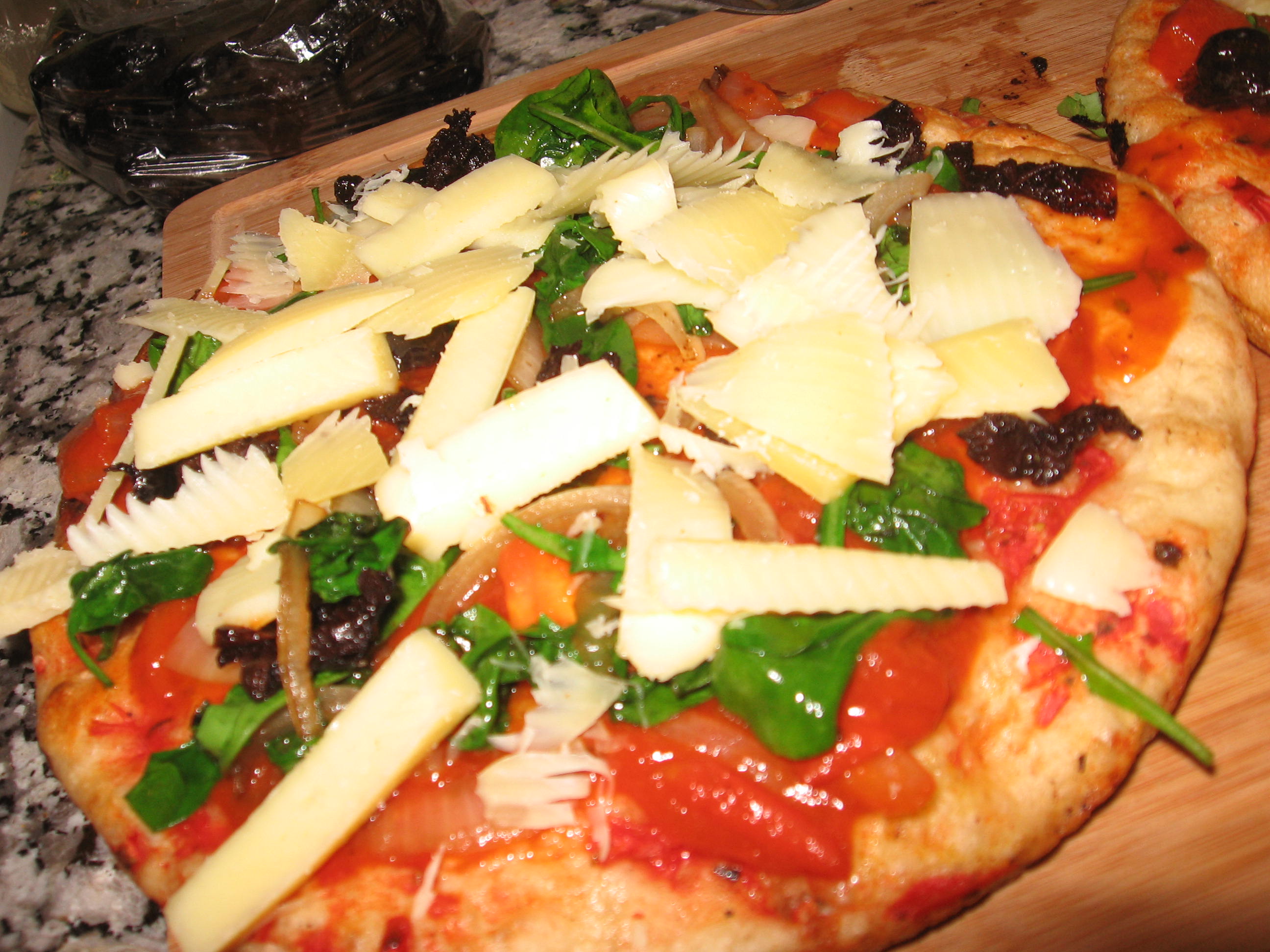
I made a simple tomato sauce using onions, garlic, oregano, fresh tomatoes, tomato puree and a shot of honey.  This crust didn’t need much, as you can see there are fresh herbs and  tomatoes baked into the crust already

Along with the crust, I came home with fresh mozzarella, arugula and some Italian Saracen style olives.  I made a simple saute, and topped the pizza with these fresh ingredients.

The pizza was delicious, especially complemented by a nice (local) Malbec.

That said, many of you who know me know that I am not that much of a pizza kind of gal-especially the white flour variety.  I tend to prefer most everything whole foods, and that has been a big challenge so far.  Thankfully, I am also very resourceful, and have found the flour, grains, vegetables and beans that I need to satisfy the whole foods gal in me.  And I have found a few good sources for a decent whole wheat bread-here they call it “pan salvado”. Salvado roughly translates to “saved or salvaged” and refers to the bran of a grain. While it is saved by removing it from the rest of the grain (the endosperm and the germ), in the case of the bread, it has been added back to make the bread “whole” again.  I love this idea, that when a food is whole, it has been saved-saved from the evils of processing and the removal or destruction of all that lovely fibrous goodness.

Cooking is a joy for me, as is exploring new (and familiar) foods in new cultures.  I will continue to seek out the interesting food traditions of this land.  I will also remain passionate about my belief in the importance of whole foods in sustaining our health.  Argentina is right behind the US in rates of obesity.  Maybe it’s time to revisit that meat and white bread centered diet?

Read Full Post »

Argentina is in the Southern Hemisphere…which means that it is winter here.  We arrived to weather that, by Minnesota standards is not terribly cold-30’s at night and 50’s during the day, but there was something about transitioning from the 95 degree humidity, to this chill that crept deep into my bones.  I just couldn’t warm up.  Meanwhile, I had been devouring  fresh salads with broccoli and kale from our garden, cold cheeses and home made sangria, and find myself in the midst of winter vegetables.

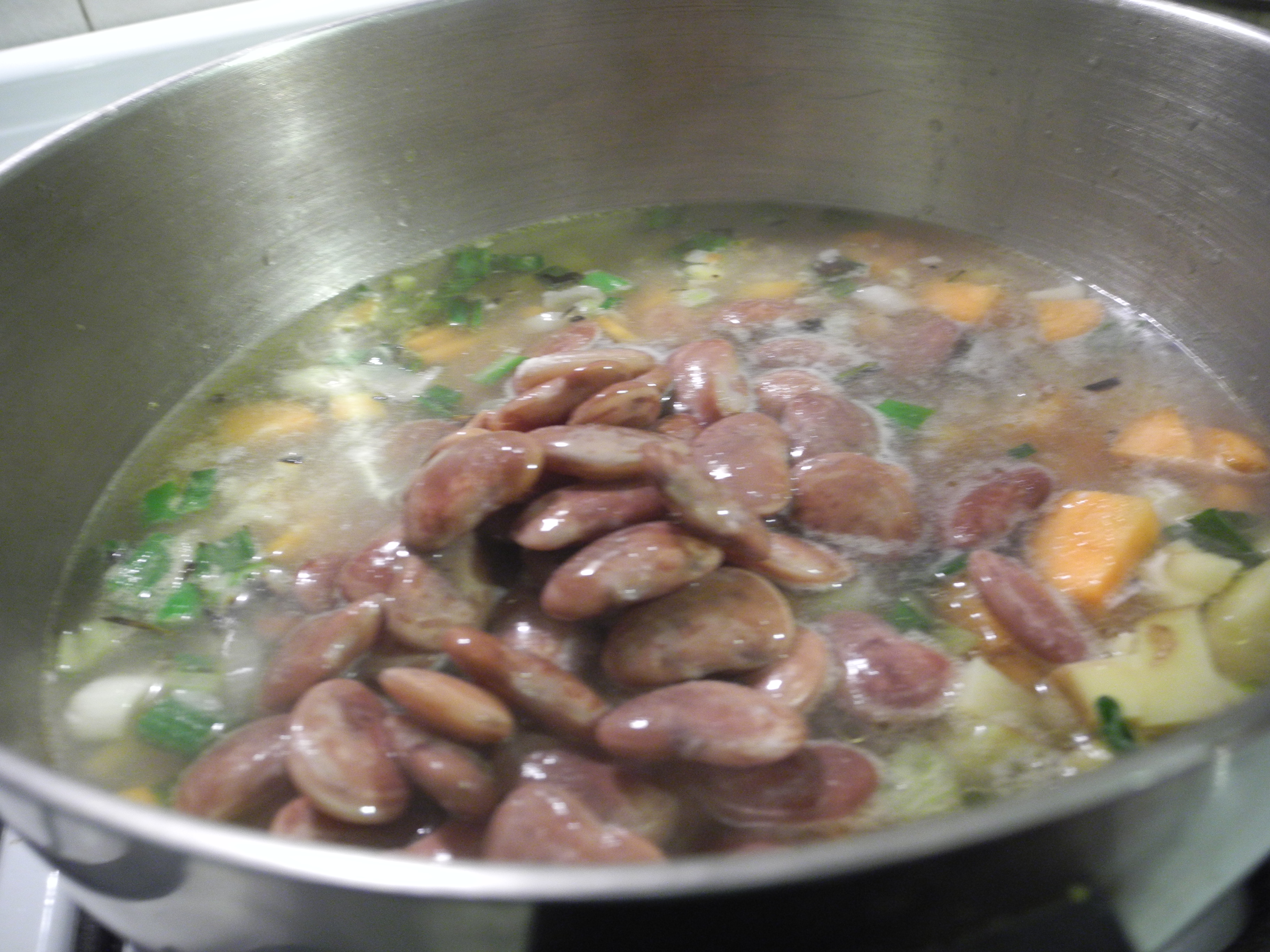
I found a wonderful produce shop in the Mercado Central-I have been there twice already.  It is a tiny stall with piles of vegetables and fruits-while you stand amidst the spinach and beans, the men (young and old) who run the place select your goods. You pick a number and wait to be called-then there is a flurry as they brush past you to grab your goods. There is a giant squash-probably 1 1/2 feet across and they will chop off a big piece for you, the spinach is big and tough, there are beautiful hand shelled fresh beans called “porotos” that are white with purplish stripes, and I bough a bag full of fresh honey.  All of these foods have gone to good use already-in fact we haven’t eaten out once yet.  With my limited repertoire of ingredients-I am relying on lots of garlic and olive oil, I have created a few simple and delicious meals.

fresh "porotos" beans cooking with carrots and potatoes

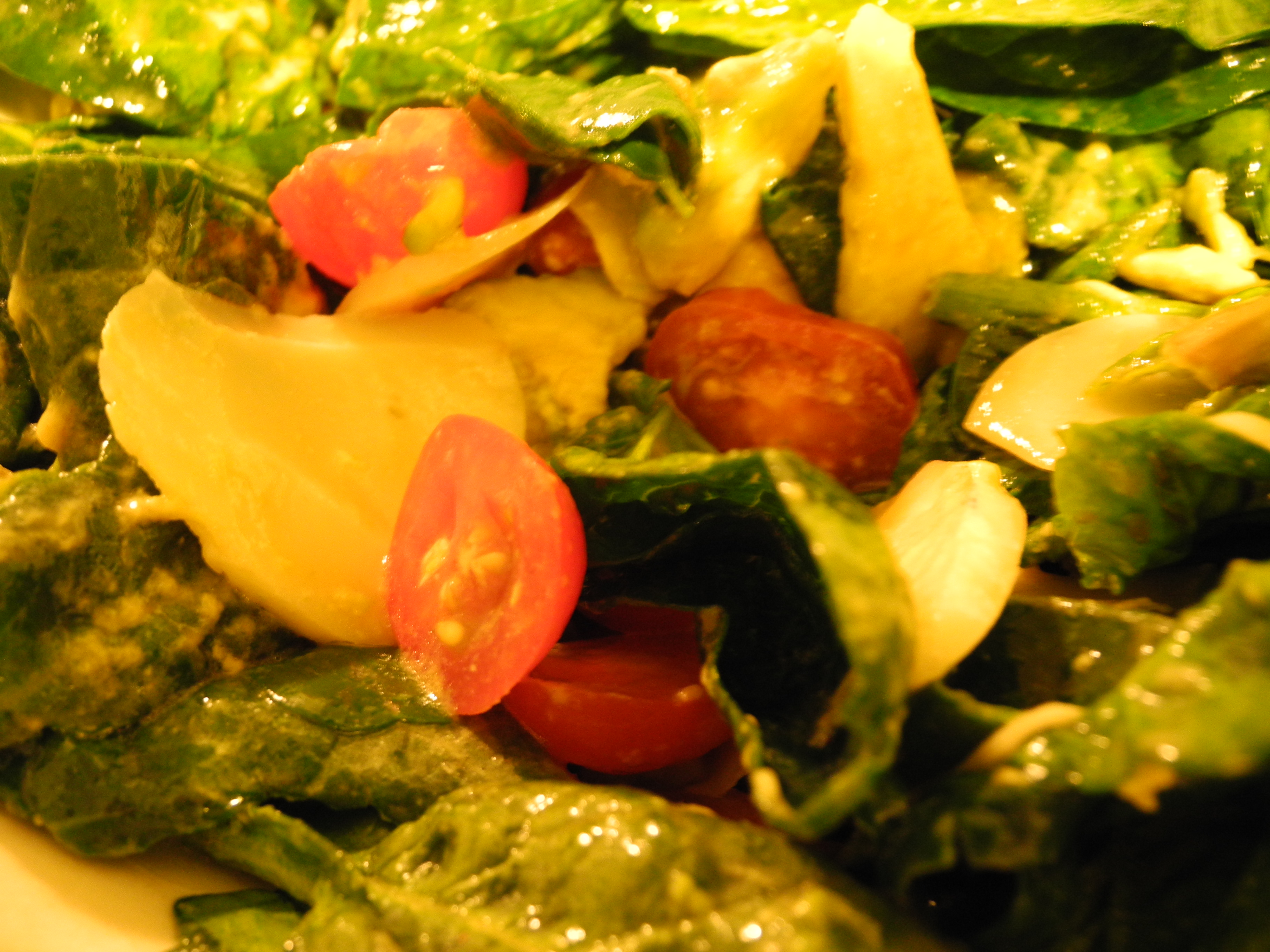
Still finding a way to have a salad- with winter spinach, fresh mozzarella, tomato and avocado

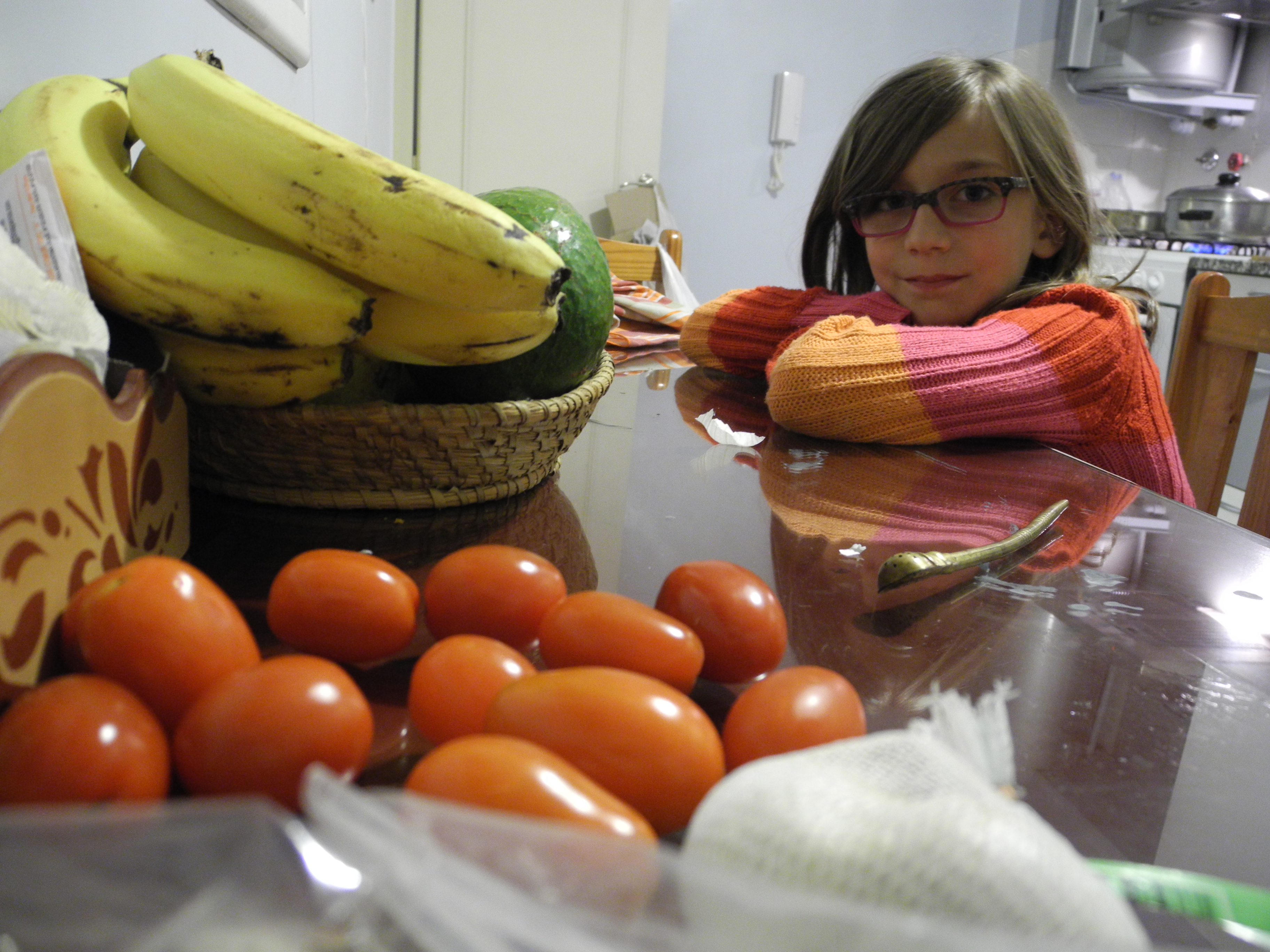
Solana, my great helper, at the kitchen table

I have been spending the last few days trying to outfit the kitchen-a fun, and exhausting task for someone who has been building a well stocked and beautifully flowing kitchen for the last 15 years. I see this as an exercise in both efficiency and openness.  What do I absolutely need, and what can I live without?  So far, basic tools-wooden spoons, pots and pans, bulk ingredients and good containers for them are most important.  They need not be fancy, in fact I am pretty simple that way, but there are basic things one needs to move smoothly in the kitchen.

There is so much more to say-about food, and everything else.  What do I do with all the food waste???? Right now, it goes into the garbage-it is almost painful every time I toss something, but so far, there is no evidence of an alternative waste stream….this is on the list of things to explore.  In the mean time, I will keep cooking.

Read Full Post »

« Newer Posts - Older Posts »

Design a site like this with WordPress.com
Get started